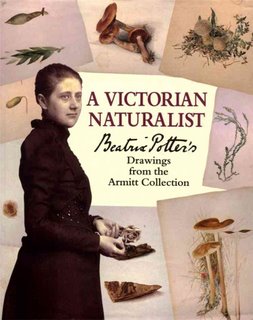
As a young woman, her interest in plants and animals became all-absorbing. On family holidays in the Lake District she made friends with the local postman, who was also an amateur naturalist (he later became the model for Mr McGregor), and he encouraged her to study fungi. With the aid of a microscope she made beautiful, precise drawings and watercolours of their different varieties, learnt to germinate their spores and developed theories about their relationship to algae and lichen. With the help of her uncle, a well-known chemist, she eventually gained access to scientists at the Royal Botanical Gardens, Kew, and at the Linnaean Society — this was in 1896, when she was 30 — but they treated her ideas with undisguised contempt. Their ignorant prejudice cut short what might have been an epoch-making scientific career, for later research has proved her conclusions correct. In the 1940s, when news of the discovery of penicillin began to circulate, she was unsurprised, for she had observed the penicillium mould’s antibacterial potential herself many years before while experimenting on moulds and fungi.