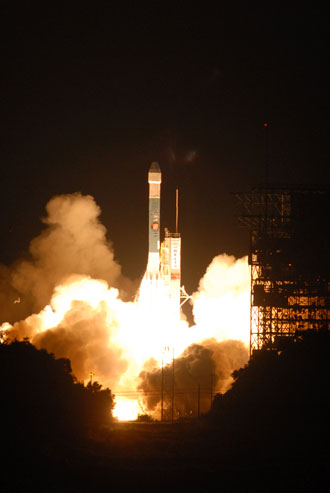
During the nine-month cruise to Mars the Phoenix spacecraft will use solar panels to generate electricity also the lander will be using this as a power source.
Phoenix arose mainly from the dust of a 1999 mission (Mars Polar Lander) which lost contact with earth close to touchdown. The lander is equipped with a special digging arm which can reach 50 cm below the surface and contains instruments that will allow scientists to analyse the mineral content below the surface in the planets artic region. The lander is initally set to cover its mission in 90 days, but it might stay on for as long as 150 days when it will finally succumb to the Martian winter.
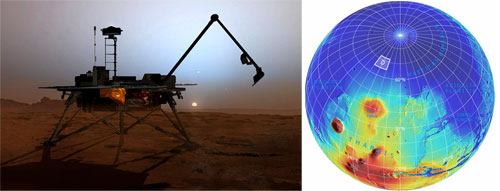 The lander and planned landing site near the artic. The lander is equipped with a special arm that allows it to digg and analyze material below the surface of Mars.