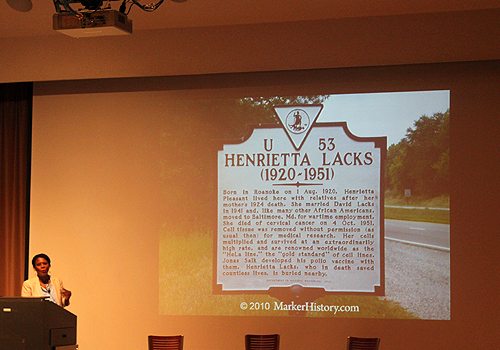
The final day of Subtle Technologies Festival, curated by Zulfikar Hirji, themed The Immortal Body included a keynote talk by Alondra Nelson providing insights into the racialised medical discrimination of Henrietta Lacks: a story about a young black woman whose cells were extracted and cultured from her cancerous tumour without her permission (a standard practice at the time) to create the immortal cell line found in laboratories throughout the world and known as HeLa cells.
Henrietta Lacks' "immortal" cells were the first to proliferate outside the body enabling medical breakthroughs that included testing polio vaccine in the 50s to research into cancer, cloning, in vitro fertilisation and Aids.
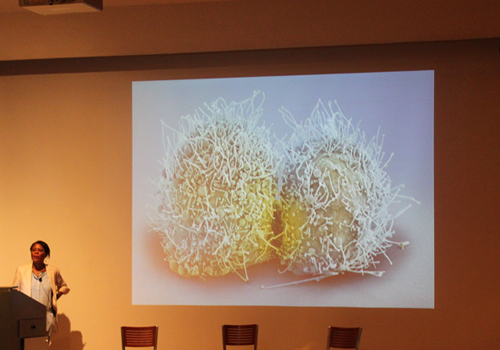
In Henrietta Lacks' case, her cells helped launch a multibillion-dollar industry while herself dying without medical assistance. Her children became informed of her immortal cells only decades later as scientists carried out research on them. Still today, her family battle to afford health insurance. The success of the best-selling publication The Immortal Life of Henrietta Lacks (2010) by Rebecca Skloot has opened up a public dialogue on bioethics to a broader audience.
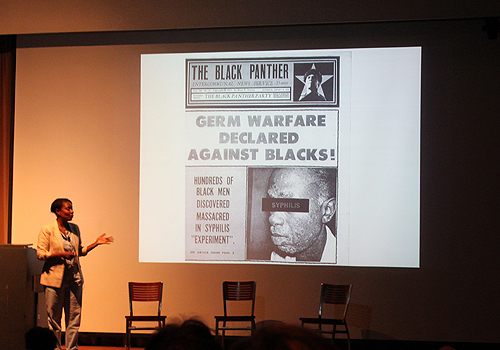
Its link to the historical context of research conducted on African Americans and the fight against medical discrimination were explored in Nelson's book the Black Panther Party and the fight against Medical Discrimination (2011). In addition to depriving treatment and assistance, medical discrimination included subjecting patients into experimental properties - i.e. unconsented exploitations (i.e. Tuskegee syphilis experiment).