The Designers and Artist for Genomics Award (DA4GA) is an annual art-science international competition where selected artists produce new works in collaboration with some of Netherland's most prestigious scientific research institutes. In December 2013, Howard Boland and Laura Cinti of C-LAB together with Bela Mulder of FOM Institute AMOLF, a world-class biophysics institute, won the DA4GA to develop LIVING MIRROR - bacterial imaging system. This involved the two artist relocating to FOM Institute AMOLF to undertake a five-month residency.
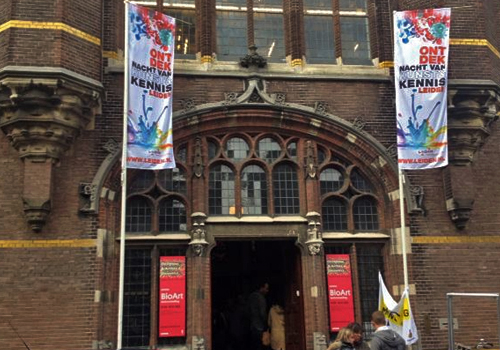
DA4GA is an initiative of the Netherlands Genomics Initiative and Waag Society, sponsored by CSG Centre for Society and the Life Sciences and presented by Naturalis Biodiversity Centre at Raamsteeg2, the former home of the Dutch National Museum of Natural History.
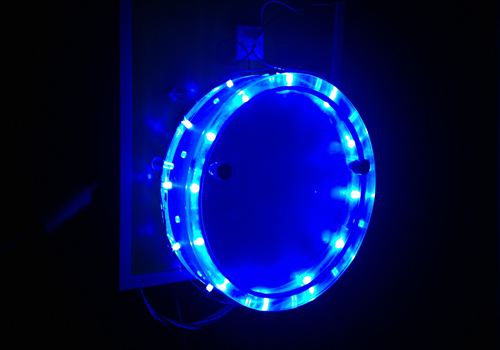
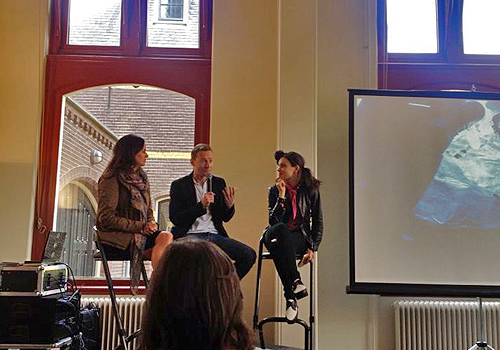
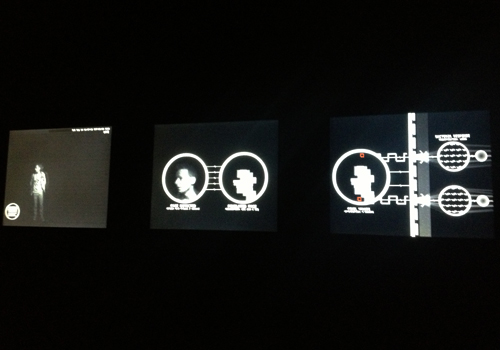
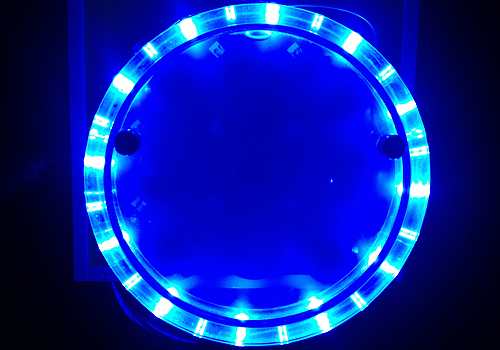
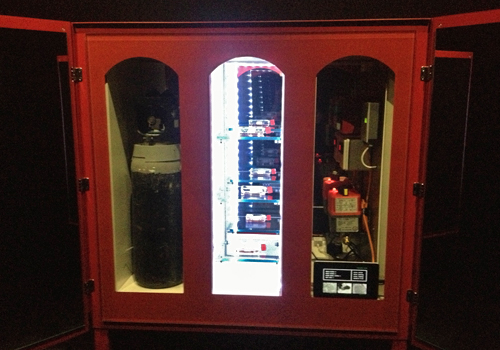
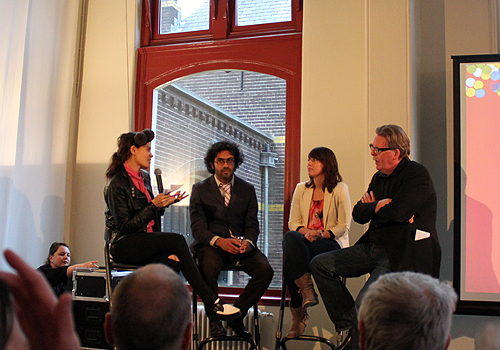
Following a drinks reception, artists were interviewed by Régine Debatty of We Make Money Not Art to give more information about exhibited works. After Régine's introduction, Howard and Laura spoke about their project, LIVING MIRROR, an interactive art installation that attempts to produce real-time images by taking advantage of magnetic bacteria’s light scattering properties and exposing these to alternating magnetic fields. Unique to these bacteria are their ability to swim along Earth’s magnetic field and when they are introduced to a changing (magnetic) field, they rotate synchronically causing the light to scatter as a visible shimmer inside liquid.
By taking pixel values from darker and lighter areas in captured images LIVING MIRROR attempts to programmatically harmonises hundreds of lights pulses to re-represent the image inside a liquid culture.
Due to the complex and technical nature of producing the full mirror, a prototype was built as a temporary installation whilst the full system is being completed.
A follow up interview with Régine was published on We Make Money Not Art.
Régine then interviewed artist Charlotte Jarvis with her scientific collaborators Christine Mummery, Christian Freund and Harold Mikkers who developed the artwork titled Ergo Sum. Ergo Sum involved Charlotte donating blood, urine and skin to Leiden University Medical Centre iPSC Core Facility during an event hosted at the Waag's Anatomical Theatre - famously depicted in Rembrandt's 1632 painting The Anatomy Lesson of Dr. Nicolaes Tulp.
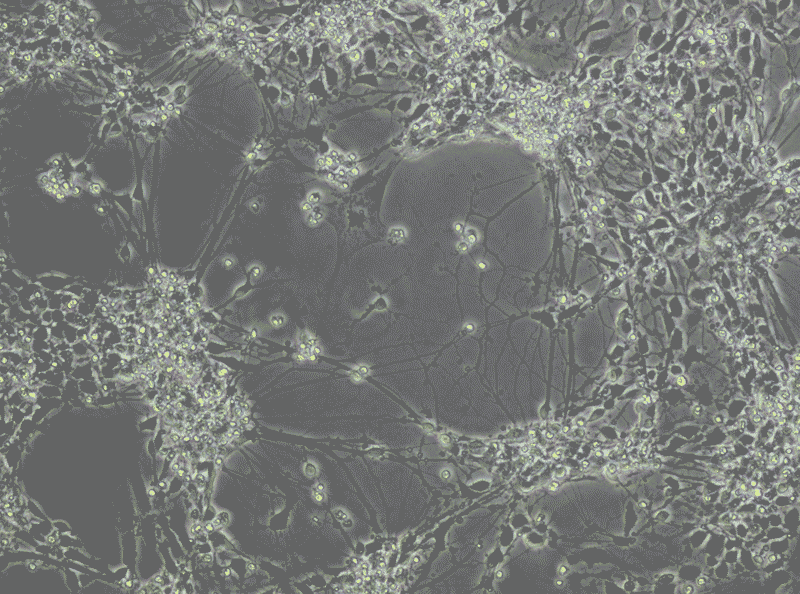
Charlotte's body samples were transformed into induced pluripotent stem cells and programmed to grow into different cells. For example, heart cells were grown from stem cells derived from her urine and brain cells were grown from stem cells derived from her skin. These living cells, grown and cared for by collaborating scientists, are currently on display in the incubator (developed by ClickNetherfield) accompanied by documentation of the project.
A follow up interview with Régine was published on We Make Money Not Art.
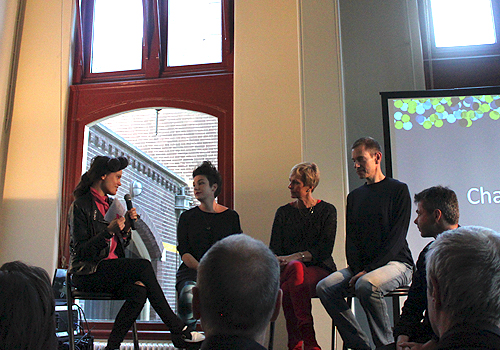
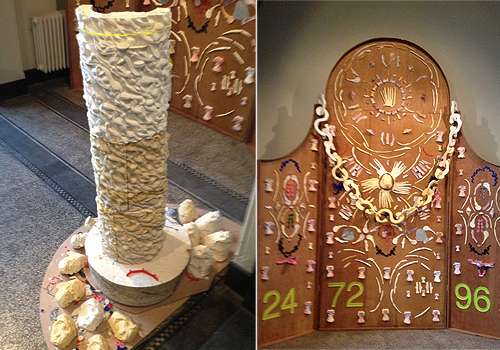
Régine's final interview was with artist Haseeb Ahmed along with his scientific collaborators Sanne Hermsen and Jos Kleinjan from Netherlands Toxicogenomics Centre. Haseeb's work, Fish Bone Chapel, is an installation integrating 3D printing with mutations in Zebra Fish skeletons induced by toxins to build an architectural structure drawing links to memento mori-themes.
Régine's indepth interview on Haseeb's Fish Bone Chapel, prior the opening, was published on We Make Money Not Art.
Bart Erkamp's, an Amsterdam based photographer, photo portraits of DA4GA artists in their working space was also shown as part of the DA4GA exhibition.