Work-in-Progress
Creating a Female
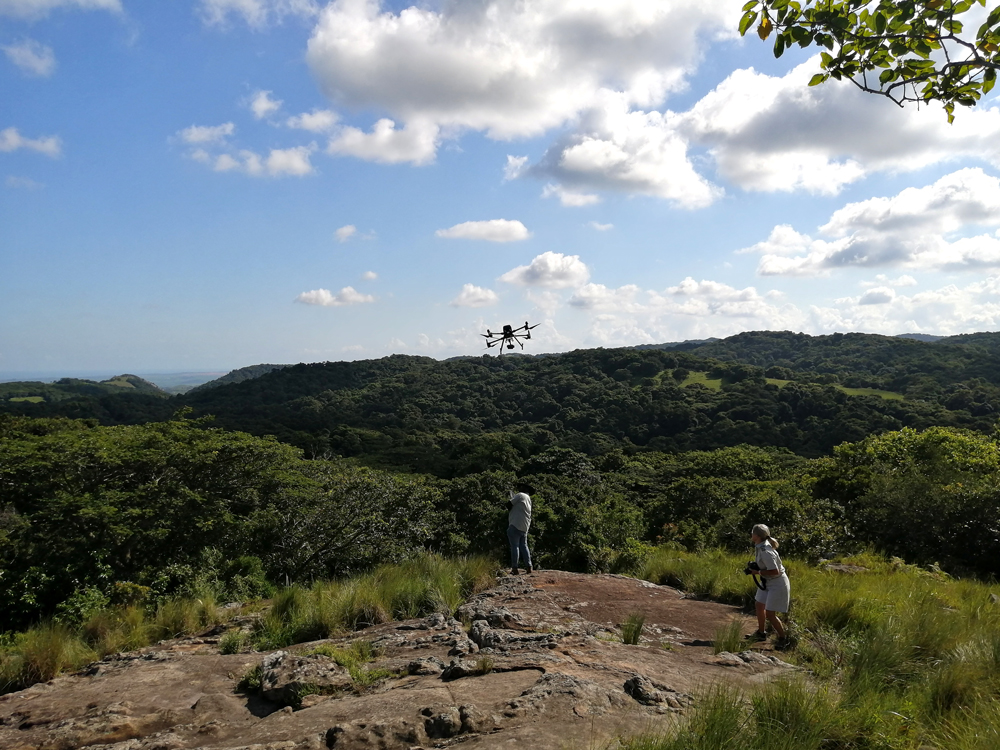
Becoming Female builds on from AI in the Sky (2024) that equipped drones with advanced sensors to create maps that allow us to see into the forest beyond the naked eye and utilises artificial intelligence - both computer vision and generative AI - to assist in the search for the female partner for one of the rarest plants in the world, the cycad - Encephalartos woodii (E. woodii). Machine learning analysis together with synthetic data improved how the maps were searched. The search is ongoing.
Becoming Female involves a series of alternative conservation strategies that look at chemically and environmentally inducing sex change from the existing male plants.
Becoming Female involves a series of alternative conservation strategies that look at chemically and environmentally inducing sex change from the existing male plants.
Artistic Intervention
with Scientific Practice
"Through the billions of years of the evolution of life on Earth, all creatures incorporated the biological mandate into their ways of becoming in the world, for if a hypothetical species did not, it would cease to exist and go extinct." (N. Katherine Hayles, Bacteria to AI, 2025)
From a biological standpoint, cycads are unequivocally dioecious: their reproduction depends on a structural separation of pollen- and seed-bearing organs across distinct individuals. Lacking a female counterpart, E. woodii is confined to clonal repetition, no possibility exists for genetic renewal, only endless offsets of the same pollen-producing lineage.
Conservation strategies to “complete” E. woodii currently revolve around two main avenues: hybridisation and sex change. Hybridisation involves crossing E. woodii pollen with ovulate cones of closely related species, such as E. natalensis. Through repeated backcrossing, the goal is to approximate a “pure” E. woodii -like lineage. Yet each generation inherits genetic material from the maternal species, raising questions of authenticity and species boundaries.
From a biological standpoint, cycads are unequivocally dioecious: their reproduction depends on a structural separation of pollen- and seed-bearing organs across distinct individuals. Lacking a female counterpart, E. woodii is confined to clonal repetition, no possibility exists for genetic renewal, only endless offsets of the same pollen-producing lineage.
Conservation strategies to “complete” E. woodii currently revolve around two main avenues: hybridisation and sex change. Hybridisation involves crossing E. woodii pollen with ovulate cones of closely related species, such as E. natalensis. Through repeated backcrossing, the goal is to approximate a “pure” E. woodii -like lineage. Yet each generation inherits genetic material from the maternal species, raising questions of authenticity and species boundaries.
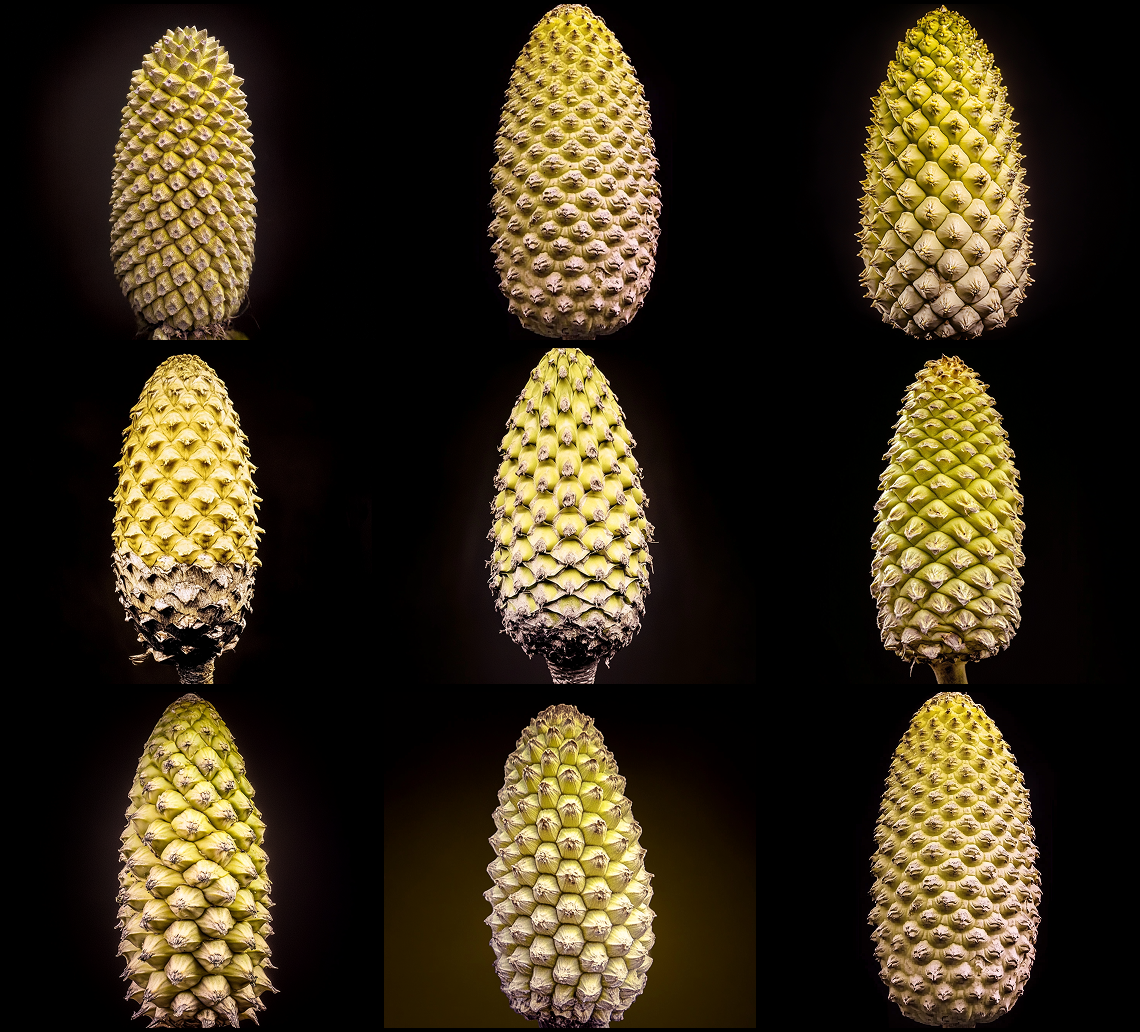
To date, no female cones of E. woodii have been observed. This illustration draws on related species and botanical inference to propose a visual hypothesis - suggesting what a female structure might resemble in this ‘extinct in the wild’ cycad.
Lab Experiments
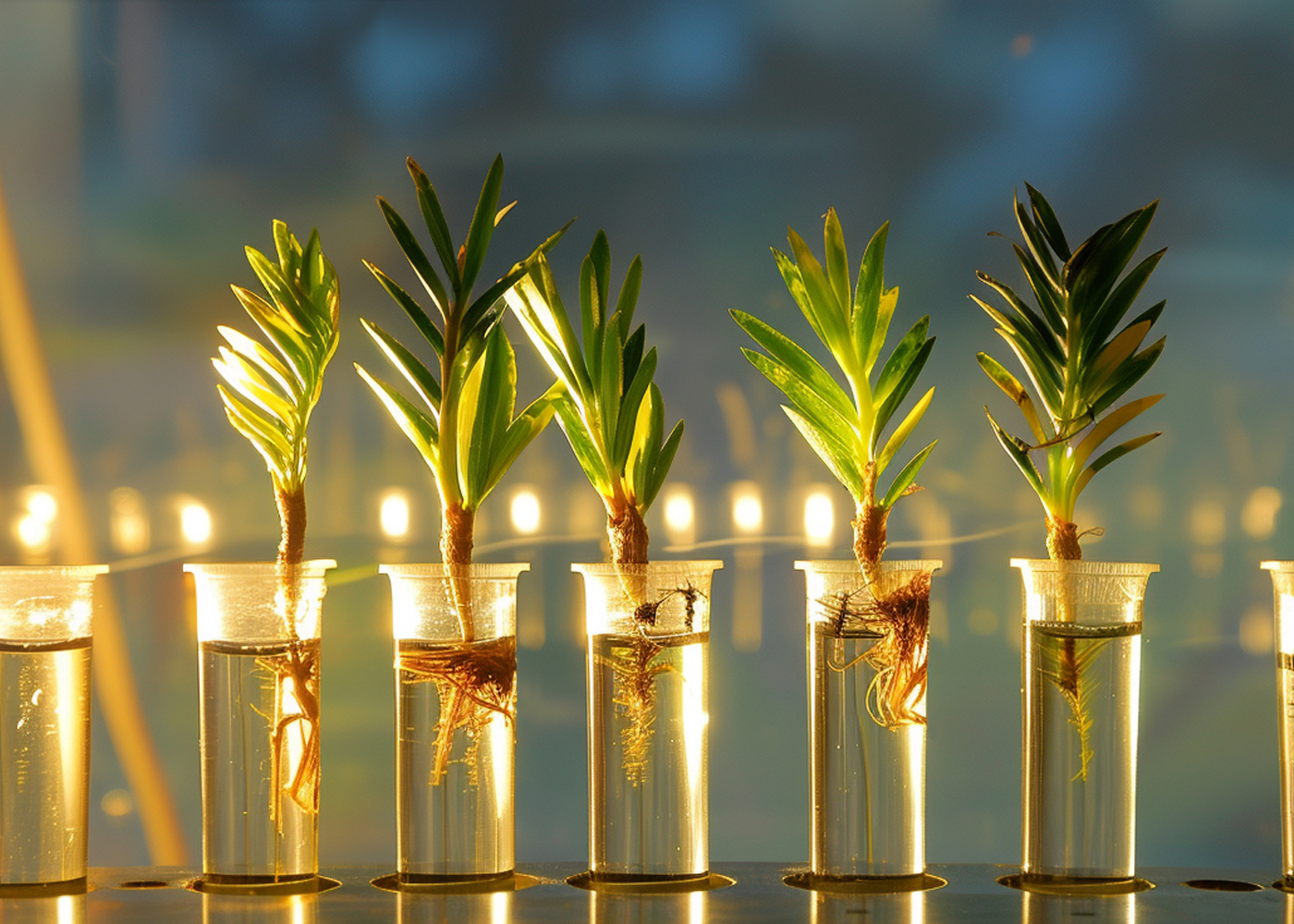
Micropropogation protocols
What happens when the future of a species depends on becoming something it has never been?
Could a species be saved by changing its sex?
Sex change represents a more radical, speculative path. The use of chemical agents and tissue culture techniques could potentially induce the development of female reproductive organs in a genetically male plant.
Initial laboratory work is underway and early-stage micropropagation protocols are being tested, marking the beginning of an experimental phase that explores the biological limits of intervention.
Could a species be saved by changing its sex?
Sex change represents a more radical, speculative path. The use of chemical agents and tissue culture techniques could potentially induce the development of female reproductive organs in a genetically male plant.
Initial laboratory work is underway and early-stage micropropagation protocols are being tested, marking the beginning of an experimental phase that explores the biological limits of intervention.