Stress-o-stat
Stress Visualised as Light
The work explores convergence between life and machine, where the machine controlling the bacteria becomes life-like and the bacteria, engineered through synthetic biology, machine-like.
Stress-o-stat, 2011
Media: Living Bacteria (GMO), Installation
Material: E. coli cultures, Chemostat, laboratory stands, growth media
Dimensions: 1600 cm x 80 cm x 160 cm [Variable]
IMMERSIVE
Laboratory Practice
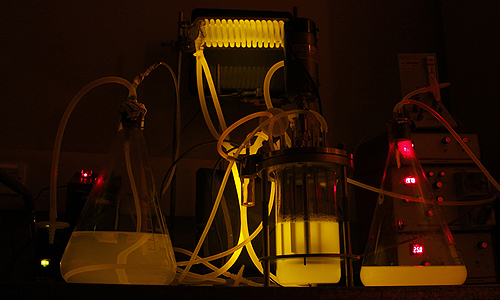
Stress-o-stat is the result of an immersive and independent laboratory practice using synthetic biology to develop new types of artistic expressions. The process involved locating a special genetic switch involved in stress response and incorporating it into a genetic construct to produce fluorescent proteins.
Genetic Switch
& Fluorescent Proteins
In practical terms, this meant having to become a scientist using evidence-based practices. The genetic switch was identified using bioinformatics and extracted from the bacterial genome. Using synthetic biology standards, a library of genetic parts was accessed, and a fluorescent expression construct was combined with the switch to complete the genetic circuit.
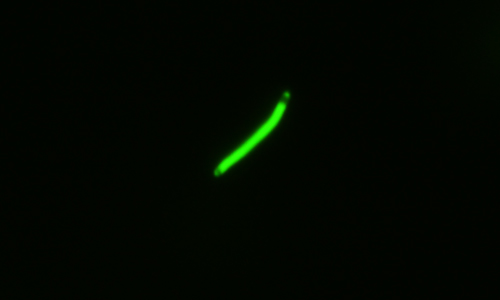
Once implemented in bacteria, fluorescent proteins are expressed during oxidative stress, producing a yellow-green colour in response to blue light. Synthetic biology often posits a machine-like language onto living organisms, as something programmable. Paradoxically, this process challenges the notion of machines becoming life-like and instead suggests life becoming machine-like.
Chemostat
Machine
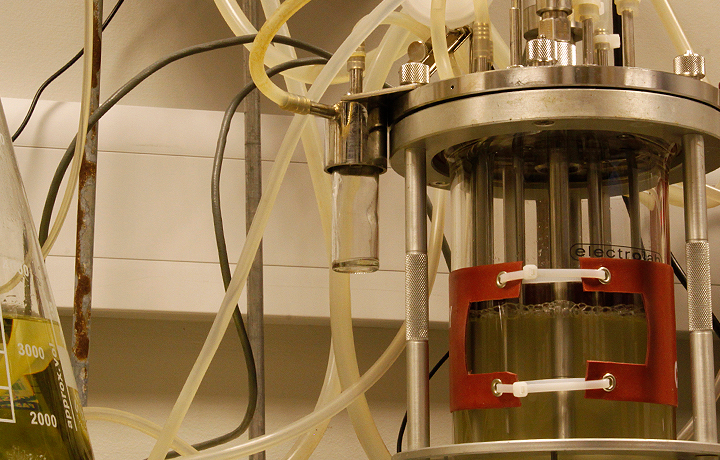
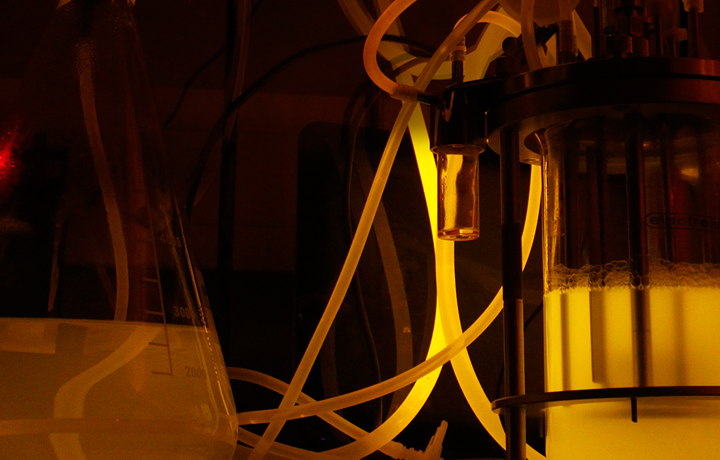
To control stress parameters as light, the work employs a fermentation setup called a chemostat. This system consists of pumps, tubes, vessels, and monitoring components, all connected functionally to maintain homeostasis in the cell population.
This machine simultaneously hosts and feeds the bacteria, drawing analogies to artificial organs and life-like machines.
Controlled
Experiment
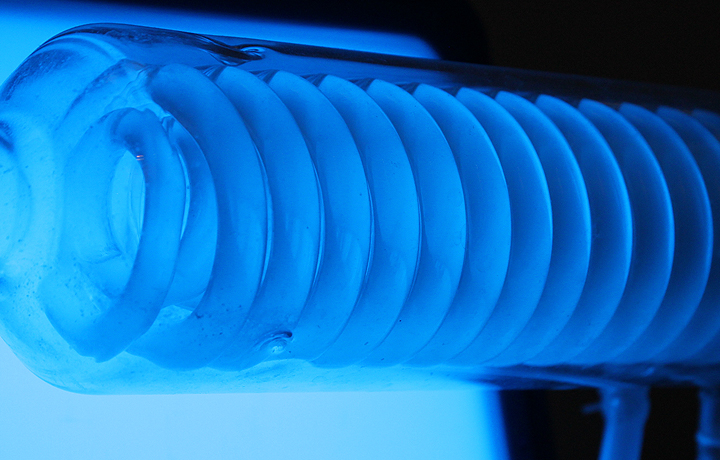
The installation uses light, filters, and a condenser to complete the stress-sensing device, both functionally and as an experimental aesthetic of scientific components. The device probes the invisible at a genetic level and renders it visible, allowing stress to be read as light. With changing parameters, stress is visualised as fluctuating light.
Installation
Setup
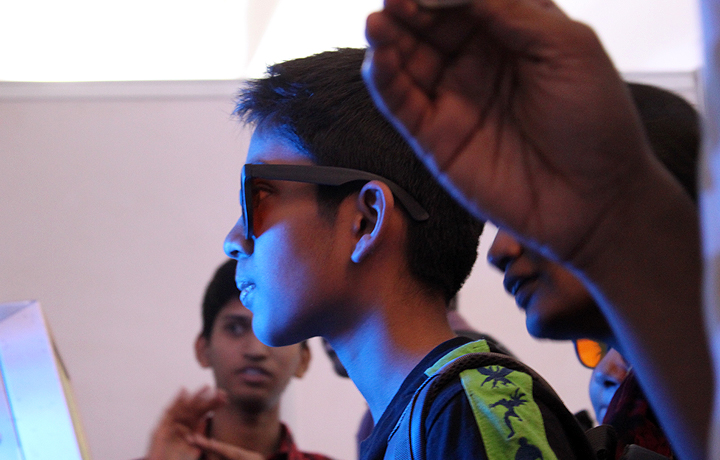
Polarised filters block the blue light, leaving only the light emitted by the fluorescent proteins. A condenser placed outside the device acts as a window by having cells pumped from inside the reaction vessel. Stress-o-stat deliberately aligns itself with domestic devices, such as thermometers and barometers, which extend our senses and reading of the environment. While the work does not aim to guide our own senses within the world, its invention prompts ideas about using our senses to explore other worlds.
Acknowledgements
& Credits
The genetic work and chemostat construction were conducted at the University of Westminster.
Stress-o-stat was exhibited at: Synthetic Biology: Machine or Life?, Science Museum's DANA Centre (October 2011) Techfest 2012, IIT Bombay, Mumbai, India (January 2012)
Sincerest gratitude to Dr Mark Clements.
Special thanks to Armaghan Azizi, Dr Anatolyi Markiv, and Neville Antonio.
Constructs for testing promoter strength were provided by the Weizmann Institute (Prof. Uri Alon and Dr Anat Bren). The MIT Parts Registry supplied an invaluable library of fluorescent constructs.

Clare Chemical Research kindly donated a Dark Reader and polarised glasses.

The research is supported by a Doctoral Award from the Arts and Humanities Research Council and University of Westminster.