The Cactus Project
Cactus Expressing Hair
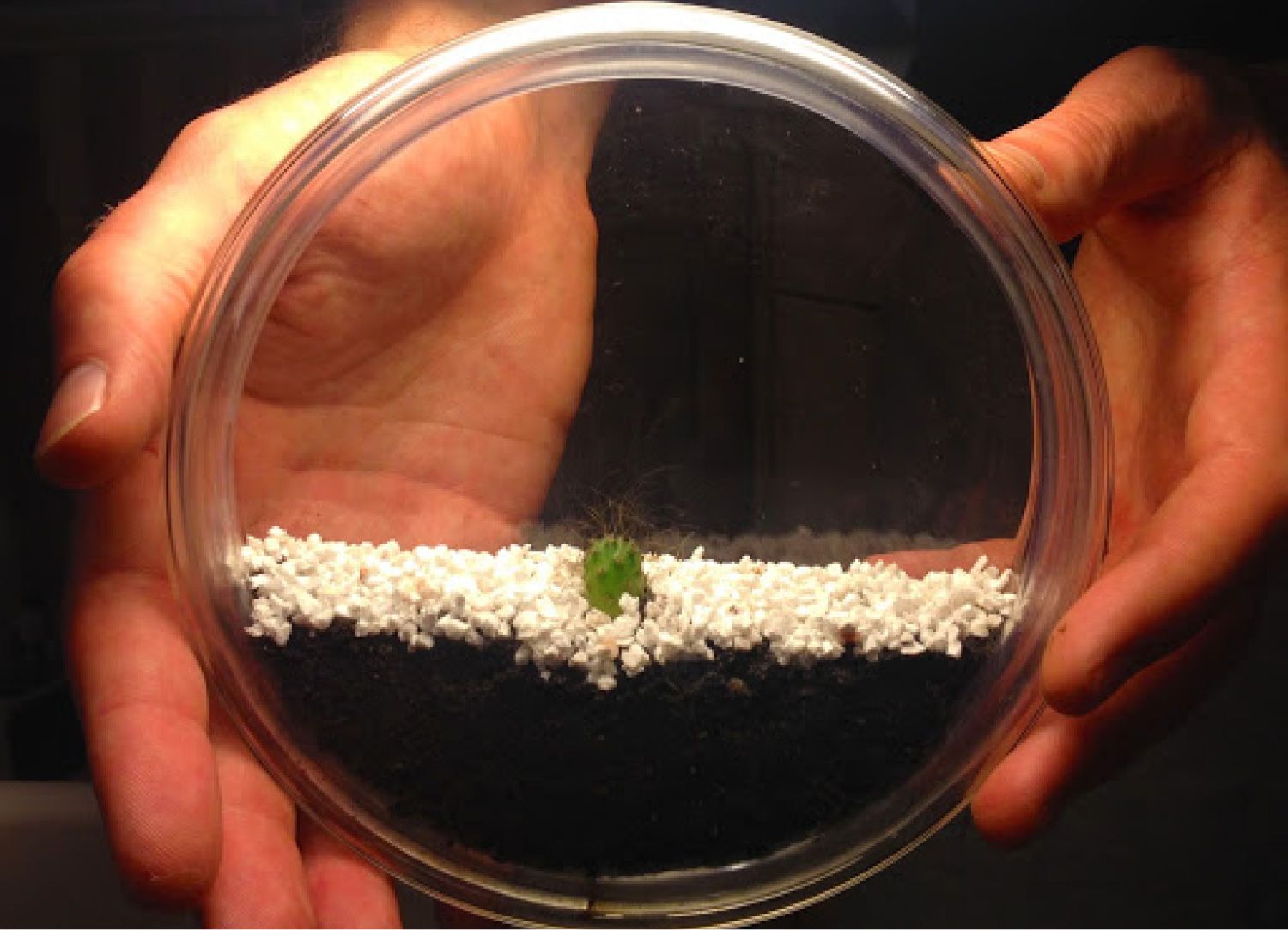
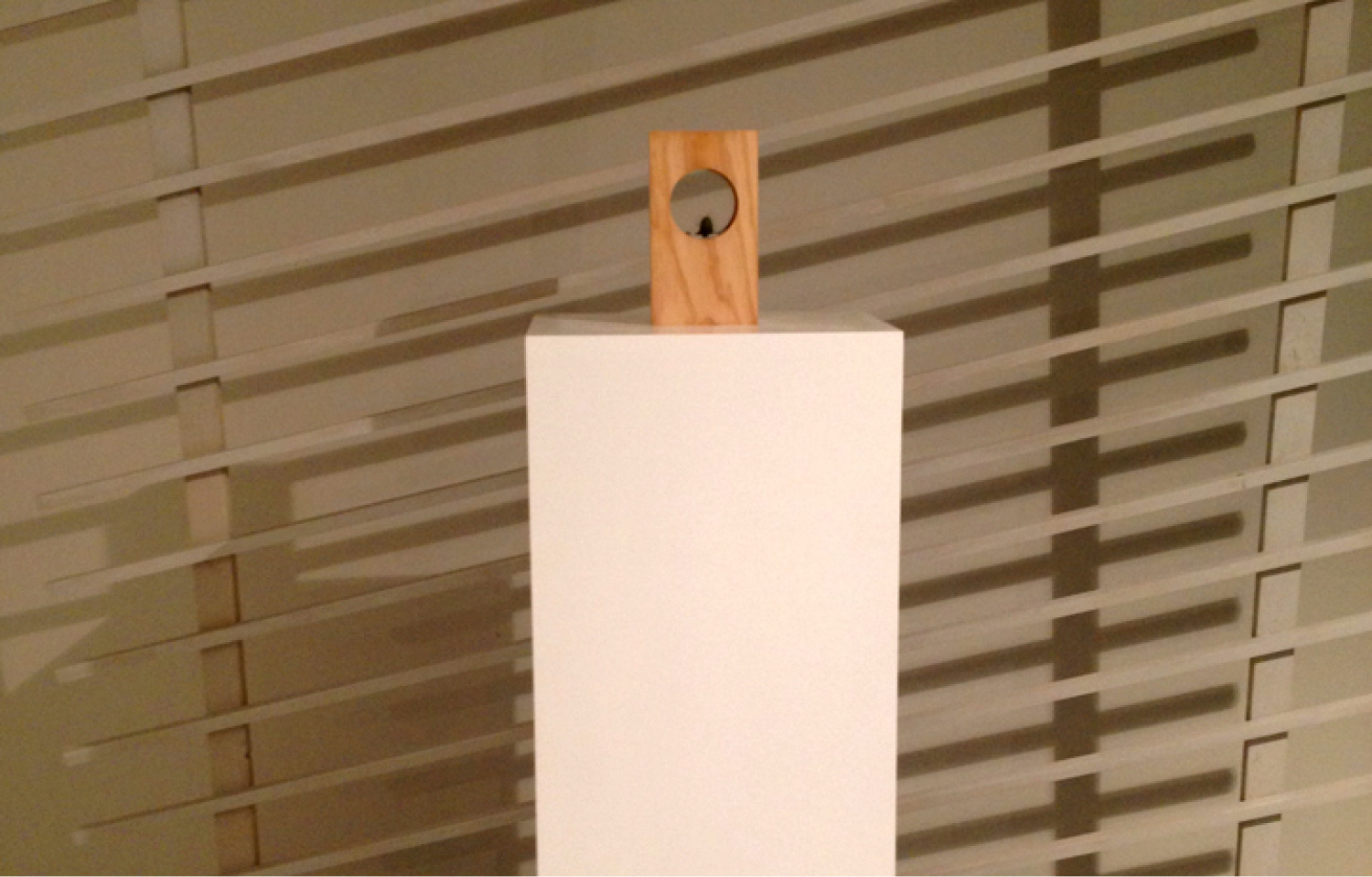
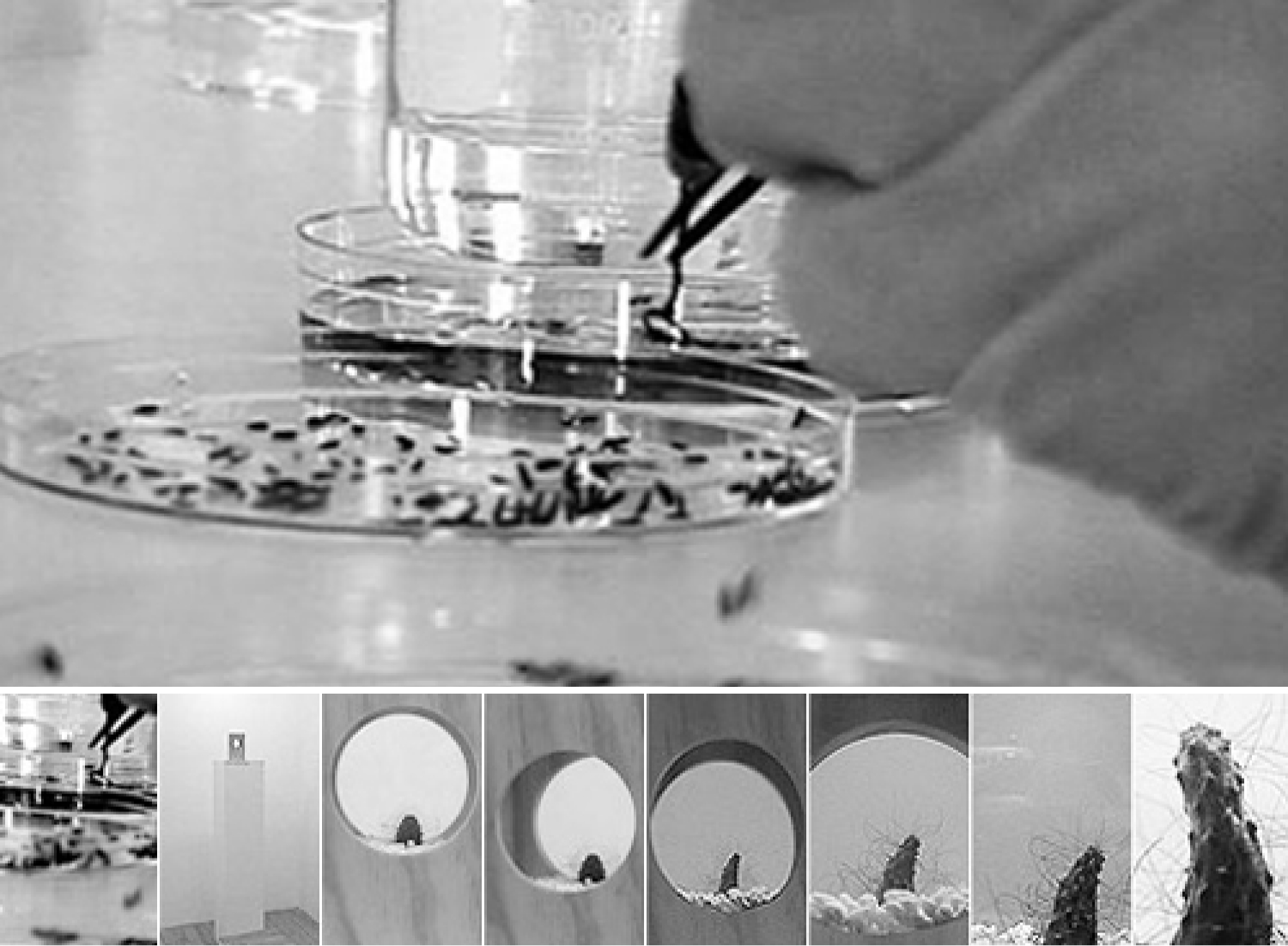
The Cactus Project is a living artwork of cacti expressing human hair. The work explores a reproductive paradox in genetic engineering—the inherent sterility of transformation processes. It employs agrobacterium-mediated gene transfer to introduce hair keratin genes into cactus cells. These transformed cells were regenerated as engineered transgenic cacti.
The Cactus Project, 2001 Media: Living cactus, backlit, large enclosed upright circular glass enclosure
Dimensions: 300 mm × 300 mm × 20 mm, 0.4 kg
Context
Crossing the Boundaries
The artwork draws on cacti's fleshy stem and swaps protective spikes with soft human hair. Metaphorically it creates an image that captures a 'perversion' of the 'asexual' and sterile engineering process. The work was subtly introduced as an intervention to the cultural climate surrounding genetic engineering in 2001.
Reflections
Material Transmissions and Identity
— Paul Lewis, The Edge Effect: Art, Science, and Ecology in a Deleuzian Century in An [Un]Likely Alliance: Thinking Environment[s] with Deleuze/Guattari
Media
Selected
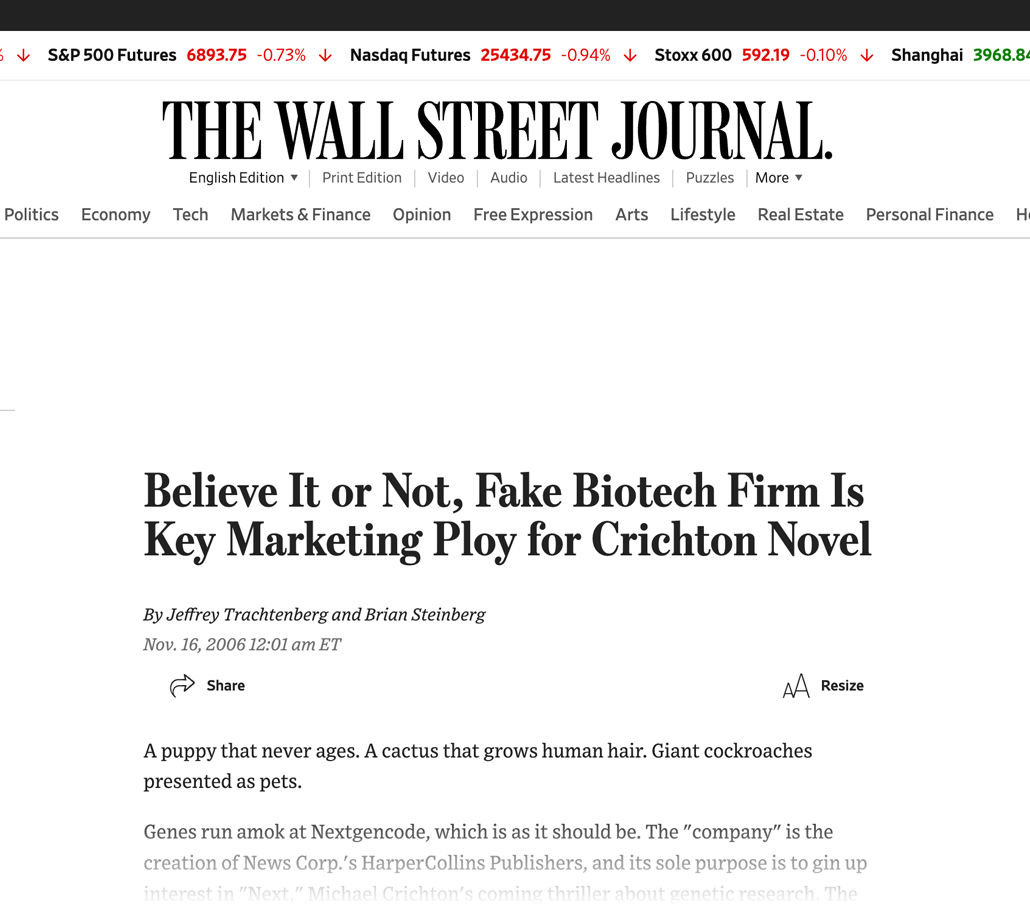
Believe It or Not, Fake Biotech Firm Is Key Marketing Ploy for Crichton Novel, MJ. Trachtenberg & B. Steinberg, the Wall Street Journal, New York, USA, 2006
Eurêka, L'Art Transgénique la Science au Service de L'Art Scientific News Program, Aired on Vox Channel, Québec, Canada, 2007
Die Kac Storie Insig Magazine, Cape Town, South Africa, 2007
Featured Artist Boog City Newspaper, Issue 32, New York, USA, 2006
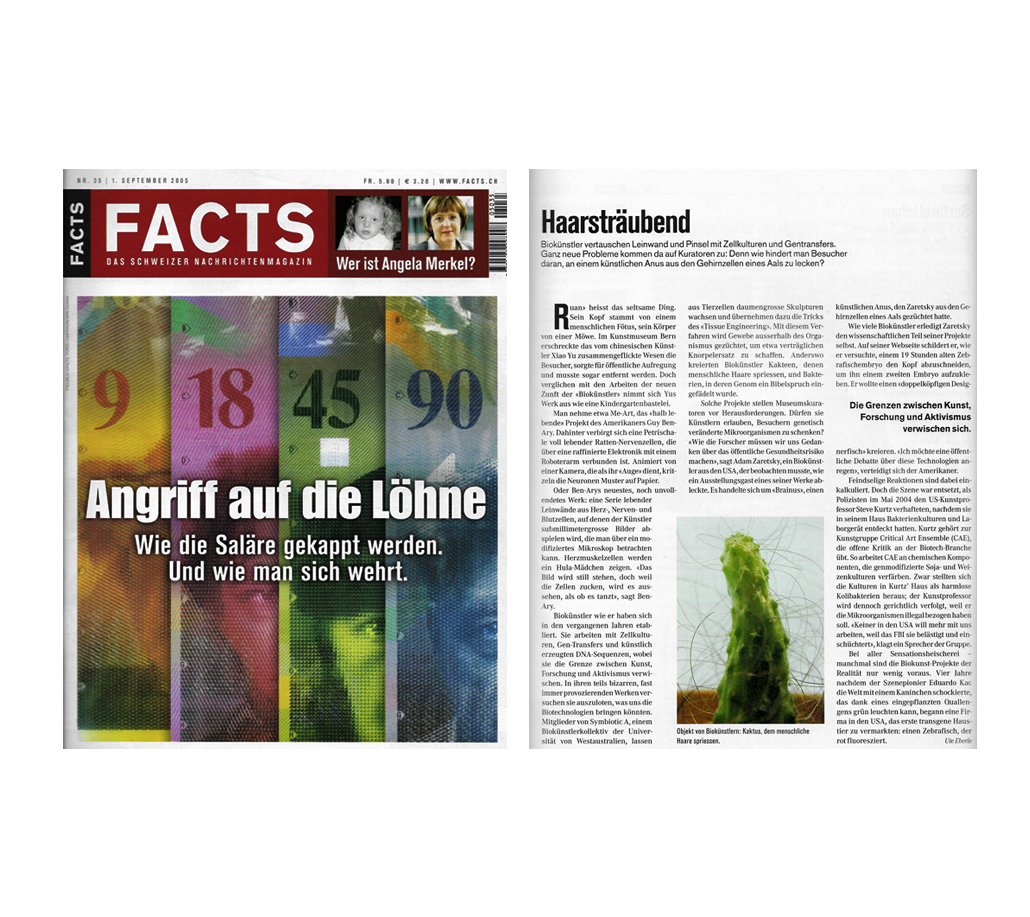
Haarstraubend Ute Eberle, Facts Das Scweizer Nachrichtenmagazin, Switzerland, 2005
The Artists in the Hazmat Suits Randy Kennedy, New York Times, New York, USA, 2005
Smile, You’re at the Science Festival The Scotsman, Scotland, 2005
Hot from the Biology Lab Comes a Cactus With Hair Anna Millar, Scotland on Sunday, Scotland, 2005
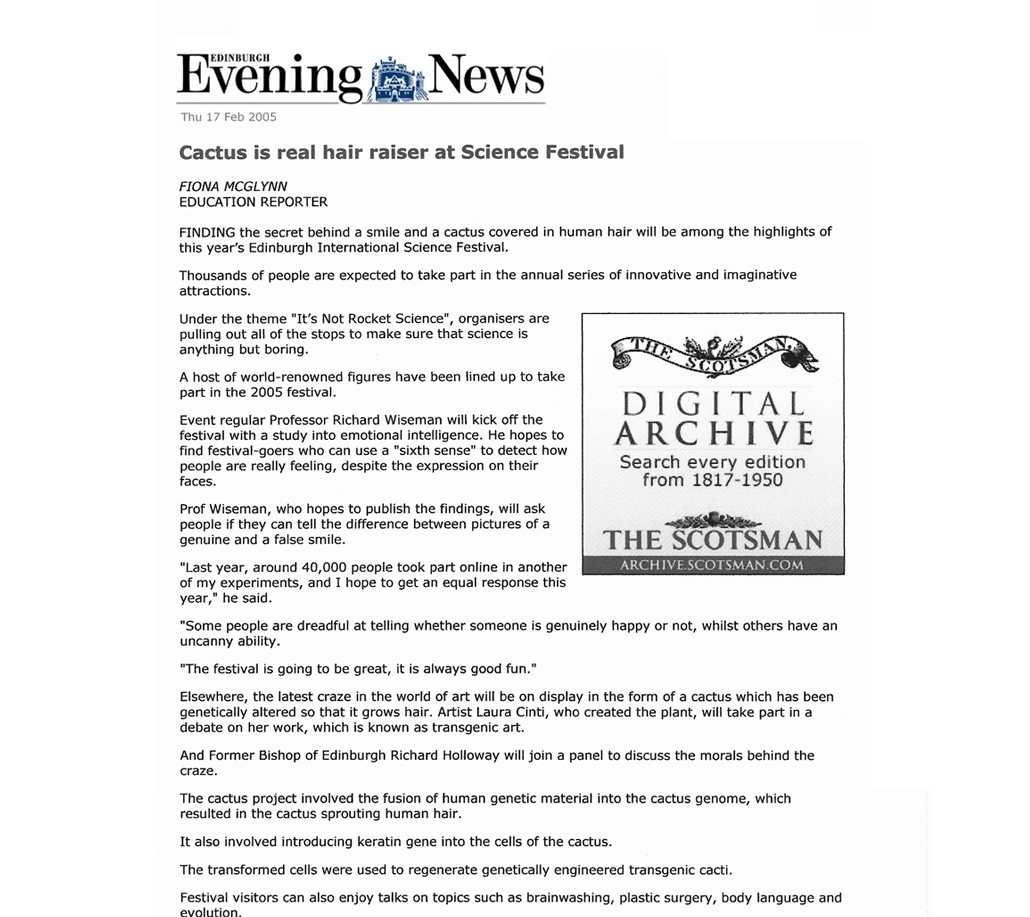
Cactus Is Real Hair Raiser at Science Festival Fiona McGlynn, Edinburgh Evening News, Scotland, 2005
Bioart – Nghe Thuat Moi Hay Chung Hoang Tuong? Nhan Dan Newspaper, Vietnam, 2005
Au Poil Courrier International, Paris, France, 2005
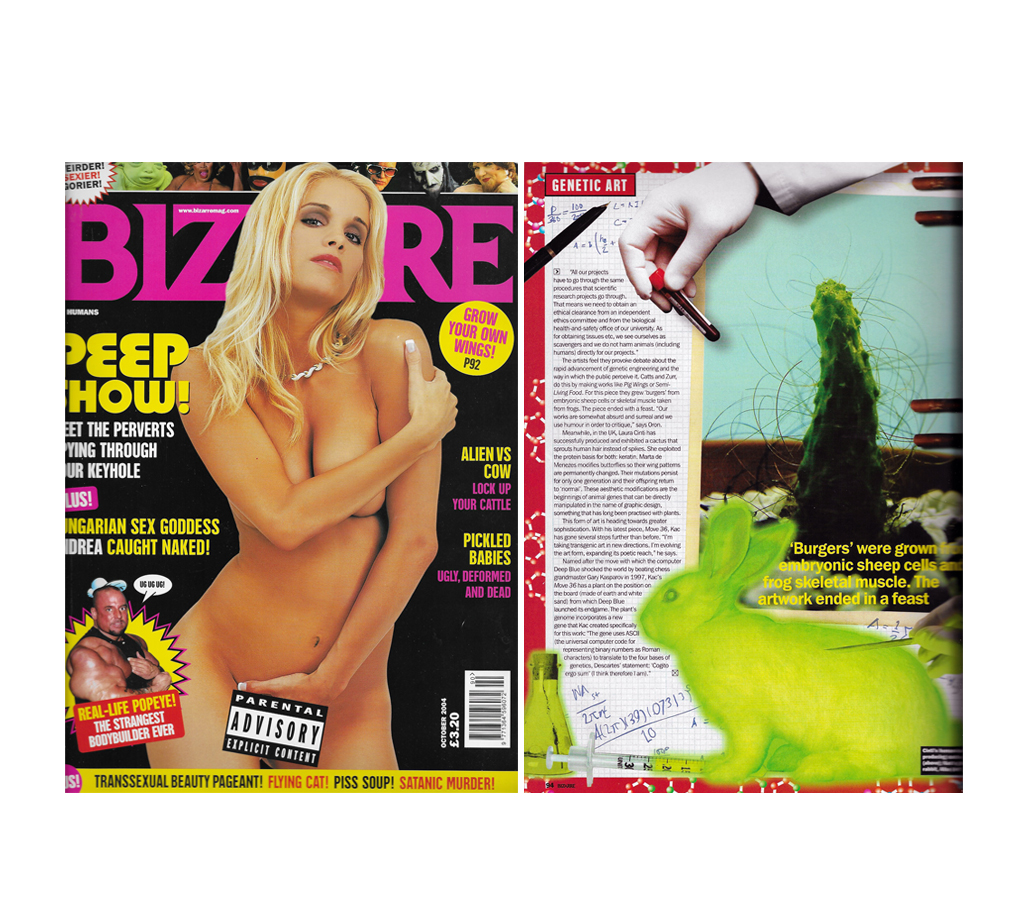
Grow Your Own Wings Mark Blacklock, Bizarre Magazine, London, UK, 2005
Hot Sites - The Cactus Project: Genetoy USA Today, Mclean, USA, 2004
Laura Cinti: Le Monde Entier Est Un Cactus Esther Quintero, Les Mutants, France, 2004
Van oerkip tot stralend konijn Merlijn Schoonenboom, de Volkskrant, The Netherlands, 2003
Publications
Selected
Singularity: Subversive Bioart LiQin Tan, Guangdong People's Publishing House, China, 2019
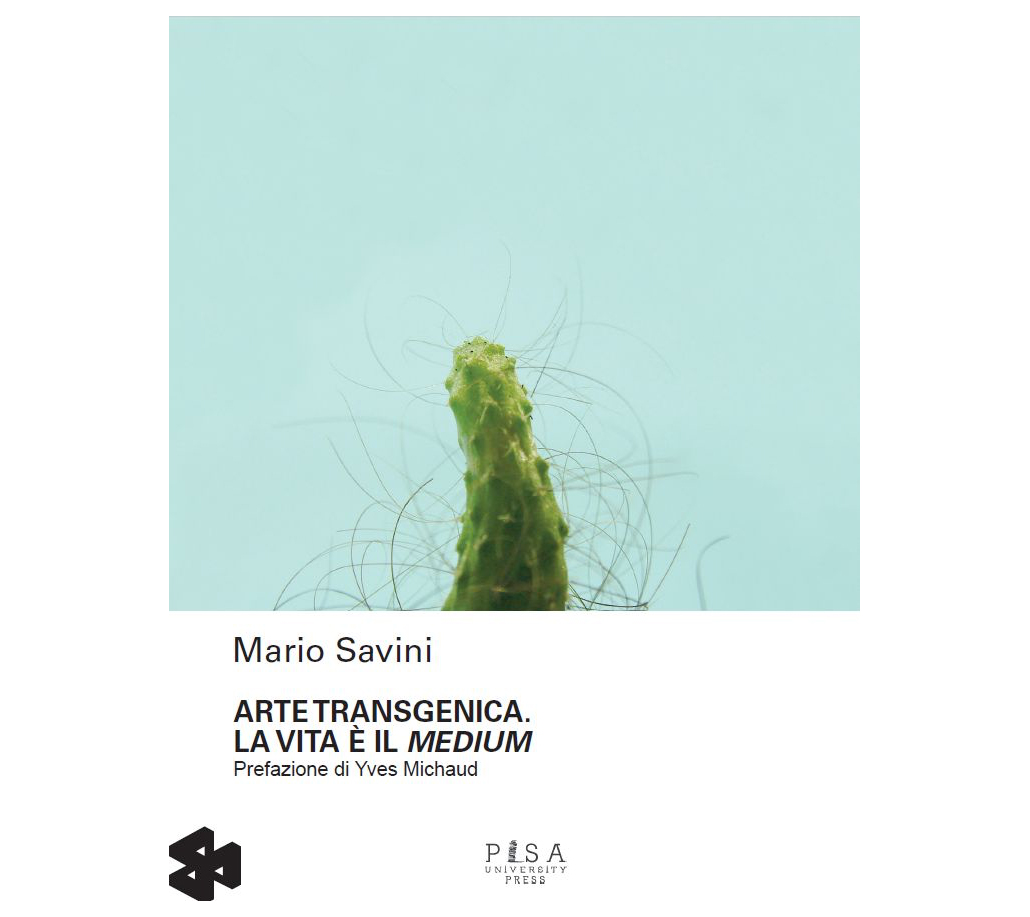
Arte Transgenica. La Vita é il Medium, Mario Savini, Pisa University Press, Italy, 2018
Gene Editing, Law, and the Environment, Life Beyond the HumanIrus Braverman, Routledge, UK, 2017
Cactus Dan Torre, Reaktion Books, London, UK, 2017
World of Art: Sculpture Now Anna Moszynska, Thames and Hudson, 2013
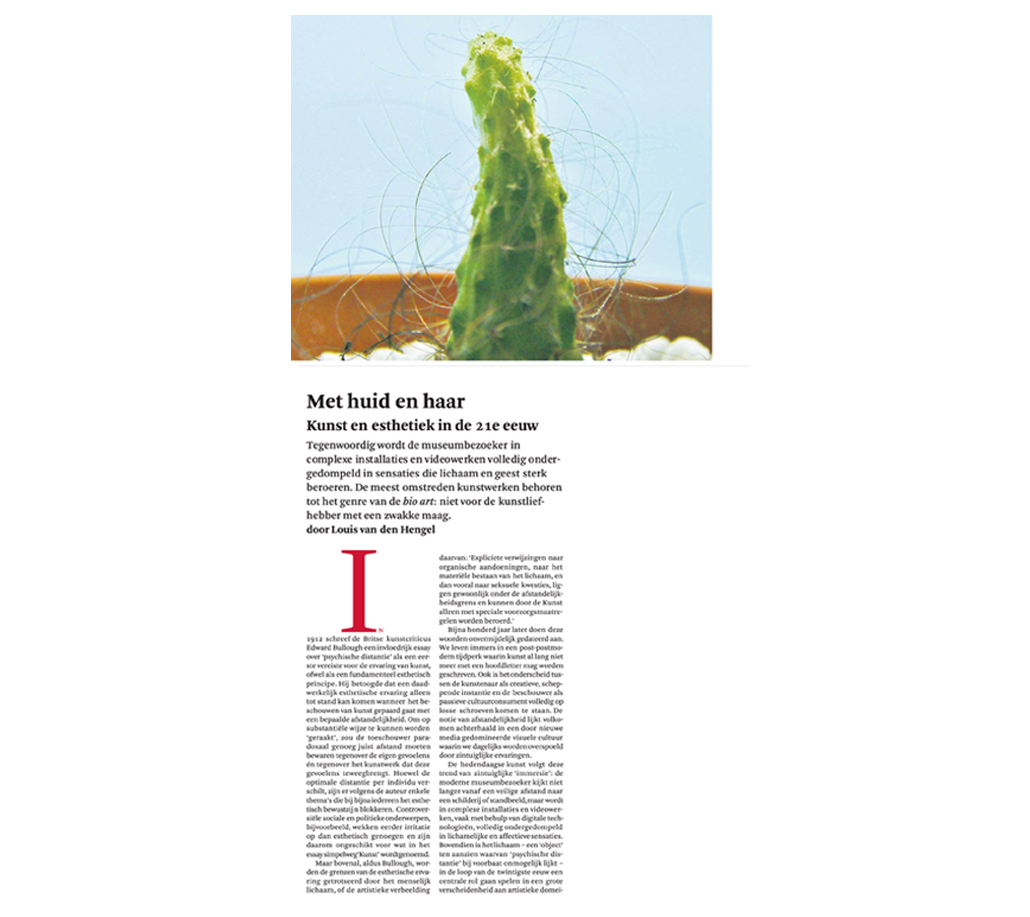
Met huid en haar: Kunst en esthetiek in de eenentwintigste eeuw Louis van den Hengel, ABG de Academische Boekengids, The Netherlands, 2009This Mortal Flesh: Incarnation and Bioethics Brent Waters, Brazos Press, USA, 2009
An [Un]Likely Alliance: Thinking Environment[S] With Deleuze/Guattari Paul Lewis, ‘The Edge Effect: Art, Science, and Ecology in a Deleuzian Century’, Bernd Herzogenrath (ed), Cambridge Scholars Publishing, UK, 2008
Ethics and the Visual Arts Gail Levin, Elaine A. King, Allworth Press, USA, 2007
NEXT, Michael Crichton, Harper Collins Publishers, London, UK/New York, USA, 2006
Det Menneskelige Eksperiment Gert Balling & Kasper Lippert-Rasmussen, Museum Tusculanums Forlag, Copenhagen University, Denmark, 2006
Art et BiotechnologiesL. Poissant, E. Daubner, Presses de l’Universite du Quebec, Canada, 2005
Bioart: Transformations Du Vivant E. Daubner, L. Poissant, Presses de l’Universite du Quebec, Canada, 2005
From Human to Posthuman Brent Waters, Ashgate, Hampshire UK/Burlington, USA, 2006
Verbeelding Van Wetenschap: Images of Science Drs. L. Hanssen, Deining Maatschappelijke Communicatie, Netherlands, 2004
The Molecular Gaze, Art in the Genetic Age Suzanne Anker, Dorothy Nelkin, Cold Spring Harbor Laboratory Press, New York, USA, 2004
Sztuka, Jakiej Nie Znamy Olga Sobolewska, Wiedza i Zycie (Knowledge and Life), Warsaw, Poland, p. 42-45, August 2004
"Cactus Project", Een Transgeen Kunstwerk - Een Interview Met Laura Cinti Jan Vandorpe, Succulenta, Issue 04, The Netherlands, p. 174-176, June 2004
Een broeierige flirtage – genomics en de artistieke verbeelding Martijntje Smits, Nederlandse Vereniging voor Bio-ethie, Jaargang 13, nr. 1, The Netherlands 2006
Wildnis Christoph Kuffer, Swiss Federal Institute of Technology Zurich, Switzerland, 2004
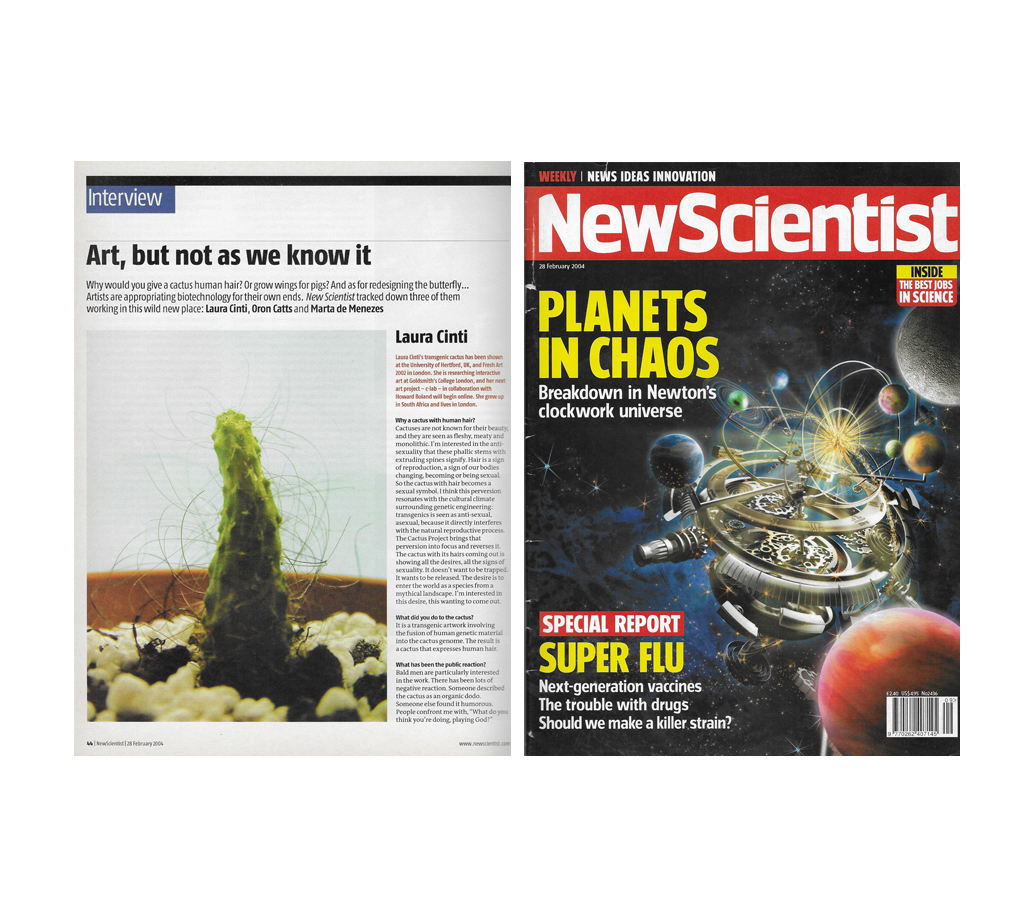
Art, But Not as We Know It New Scientist, UK, p.44 - 47, 28 February 2004