Curator statement
Bios 4. Arte Biotecnológico y Ambiental
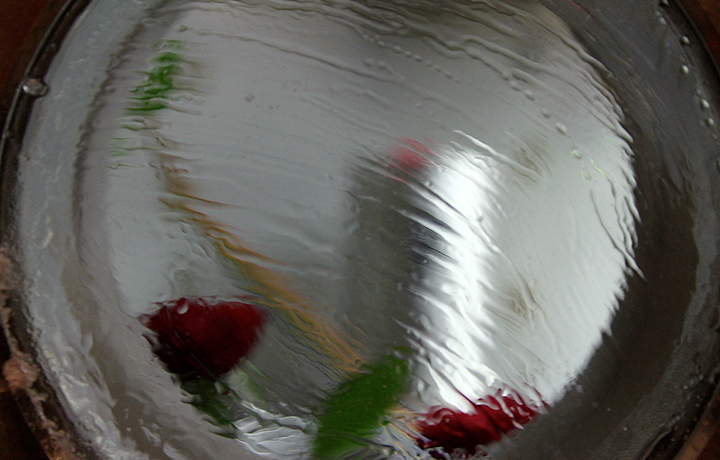
"Of all flowers, the rose evokes both the artificial and the poetic, both passion and fragility. Submitted in laboratory conditions to the atmosphere of Mars, the rose died. Mars is not the B612 asteroid in The Little Prince and, in its cylinder reminiscent of a space probe, the flower reminds us that space is a place of death."
Annick Bureaud and Jean-Luc Soret, Curators, Festival @rt Outsiders 2009, (In)Habitable? L'Art des Environments Extremes
From Lab to Exhibition
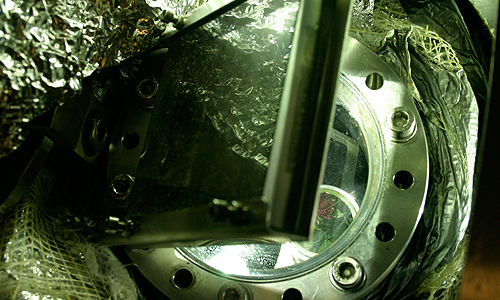
Mars Simulation laboratory
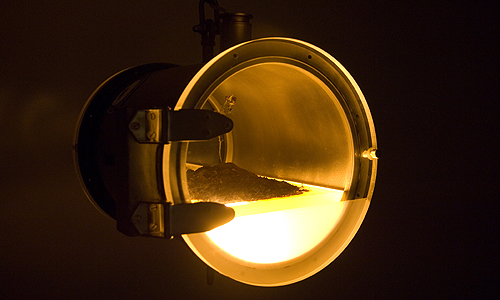
Using a planetary simulation chamber, roses were exposed to Martian environment for six hours at the Mars Simulation Laboratory, University of Aarhus, Denmark on 27th March 2007 for the exhibition Bios 4: Arte Biotecnológico y ambiental at the Andalusian Contemporary Art Center in Seville, Spain and again on 1st and 2nd September 2009 for the exhibition (Un)Inhabitable? - Art of Extreme Environments at the European Museum of Photography in Paris, France.
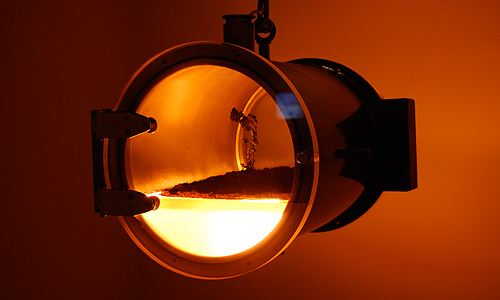
What would Mars do to a rose?
Mars Simulation laboratory
The Martian Rose is an artistic investigation into boundary conditions of life beyond Earth's environment.
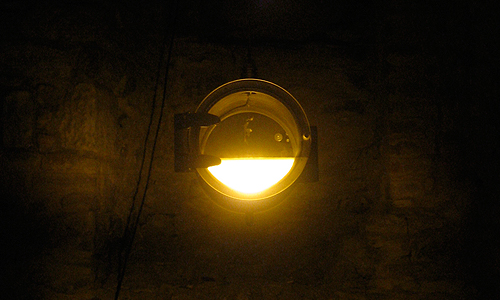
Hostile Environment
Mars Simulation laboratory
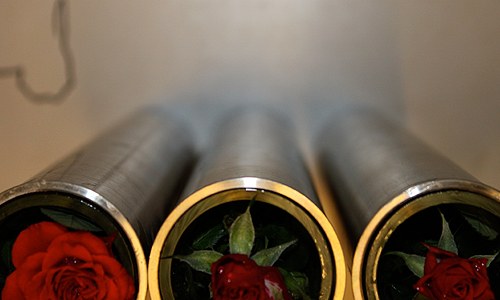
Hostile Environment
Mars Simulation laboratory
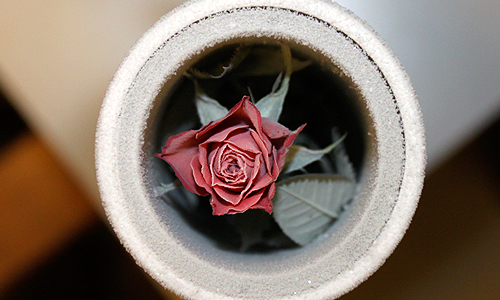
Poetic Negotiation
Scientific Spaces
Discourse
Acknowledgements
& Credits
The laboratory experiment was conducted by Dr Jon Merrison at the Mars Simulation Laboratory, University of Aarhus, Denmark in March 2007 and September 2009.

Our sincerest gratitude to:
Dr Jon Merrison and Dr Per Nørnberg, Mars Simulation Laboratory, Aarhus University, Denmark.
Professor Nigel Mason, Department of Physics and Astronomy and Professor Charles S. Cockell, Planetary and Space Sciences Research Institute, The Open University, UK.
Supported by a grant from

A new edition of the work was supported by the @rts Outsiders Festival 2009 with thanks to Jean-Luc Soret and Annick Bureaud.

Media
Selected
A Rose on Mars is still a Rose, Brandon Keim, Wired Science, Wired, USA, 2007
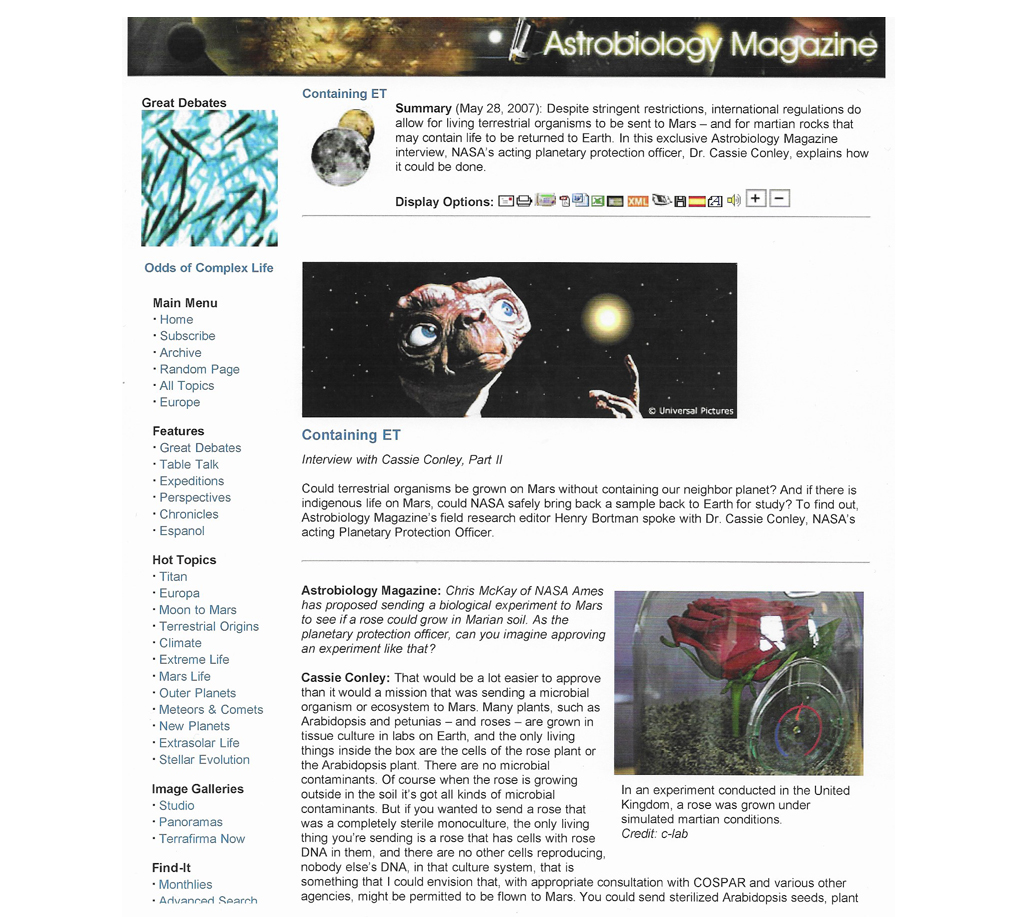
Containing ET, Astrobiology Magazine, NASA-Sponsored Online Science Magazine, USA, 2007
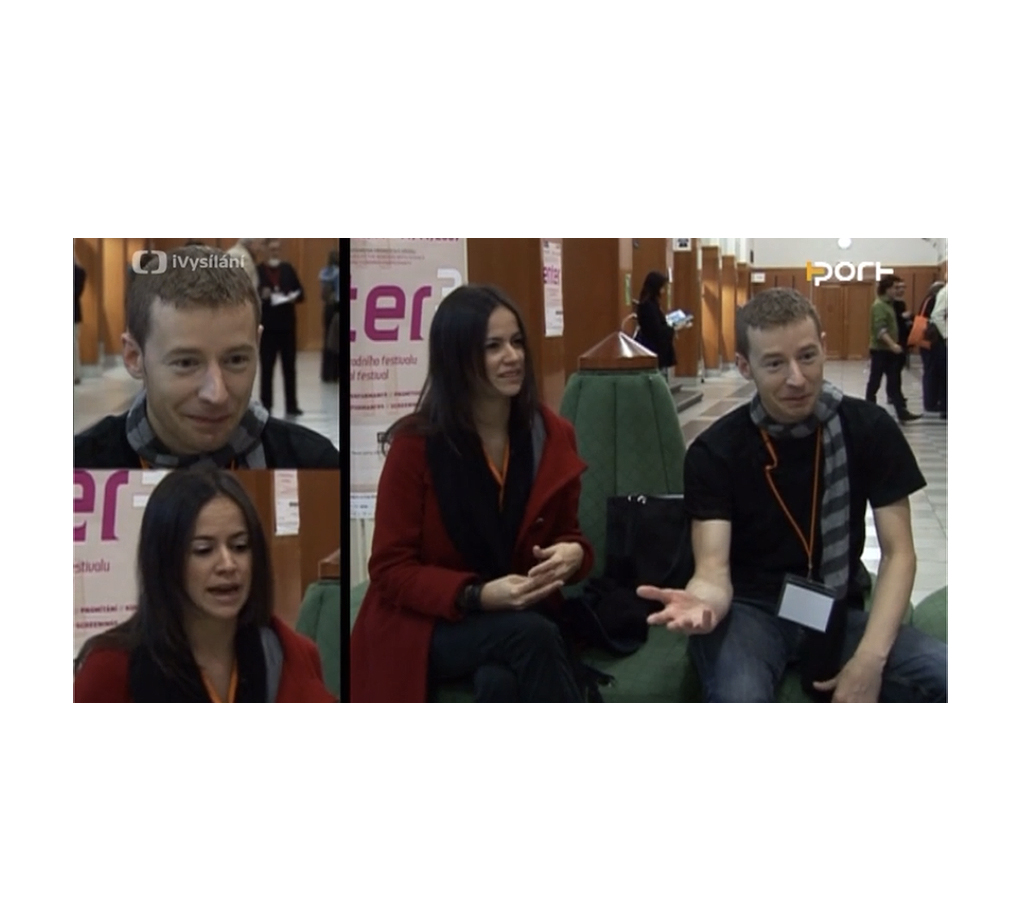
Růže z Marsu Ceska Televise Port TV (Interview for Czech Television), 18 June 2008
Interview with C-Lab Metropop, Issue 381, 21 November 2013, p. 130, Hong Kong, China, 2013
Martian Rose at Microwave Festival 2013 TVB Pearl News, Hong Kong, 2013
Microwave Festival 2013 Teaser Microwave New Media Arts Festival, Hong Kong, 2013
The Martian Rose - Microwave Festival Art News, Arts Promotion News Network, Hong Kong, China, 2013