The Phenomenon
A biological pixel
The behaviour of these organisms raises a question: could a living system function as a pixel? A single unit that shifts between states - not through voltage or chemistry, but through the physical reorientation of billions of bodies in response to a magnetic signal.
If so, what could it respond to? A magnetic field can be shaped by almost anything that generates or modulates a signal - sound, gesture, breath, proximity, the rhythms of music, the flow of data. The bacteria don't distinguish between sources. They align with whatever field reaches them. It is an opening of possibility towards a living display.
The effect is most clearly observed in a darkened space, using focused illumination and a slow, continuously shifting magnetic field. Under these conditions, the collective reorientation of the bacteria produces a visible, dynamic change in how light scatters through the liquid.
If so, what could it respond to? A magnetic field can be shaped by almost anything that generates or modulates a signal - sound, gesture, breath, proximity, the rhythms of music, the flow of data. The bacteria don't distinguish between sources. They align with whatever field reaches them. It is an opening of possibility towards a living display.
The effect is most clearly observed in a darkened space, using focused illumination and a slow, continuously shifting magnetic field. Under these conditions, the collective reorientation of the bacteria produces a visible, dynamic change in how light scatters through the liquid.
Magnetotactic
Bacteria
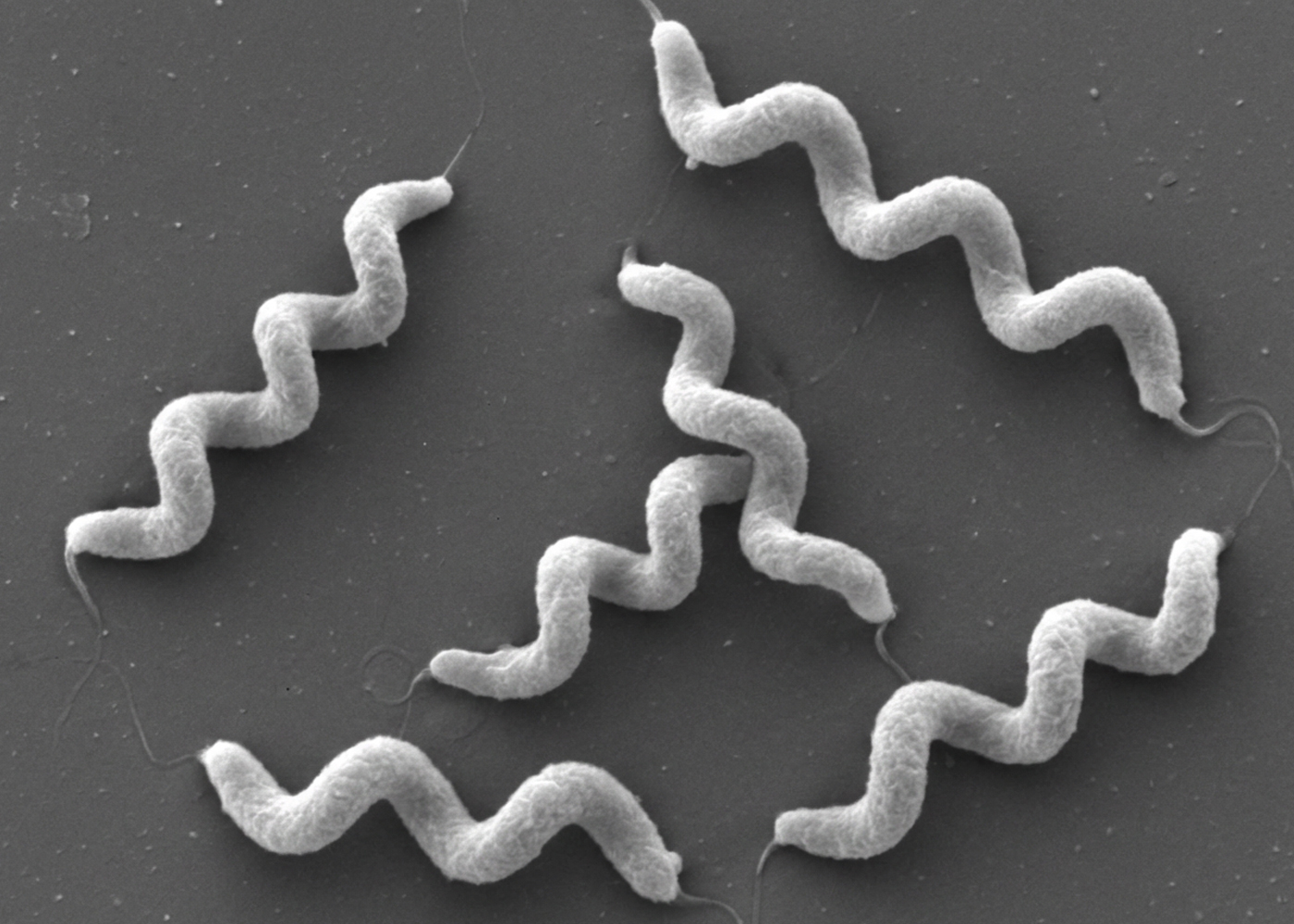
Magnetospirillum gryphiswaldense is a magnetotactic bacterium first isolated by Dirk Schüler in 1990 from the Ryck River in Greifswald, Germany. It has since become a key model organism for studying magnetism in living systems - a line of inquiry that traces back to Salvatore Bellini's first observations of magnetically responsive bacteria in 1963 and Richard Blakemore's formal description of magnetotaxis in 1975.
The bacterium produces magnetosomes - chains of iron crystals that run through the cell like a compass needle. These structures physically align the organism with magnetic field lines. It does not sense direction. Its body is structured by magnetism: the field acts directly on the architecture of the cell, orienting it without any signal processing or decision. In nature, this guides the organism toward the low-oxygen sediment environments it requires.
In The Phenomenon, this same property is put to work at the scale of a population. When billions of cells reorient together, their collective alignment becomes visible - magnetism translated into light.
The bacterium produces magnetosomes - chains of iron crystals that run through the cell like a compass needle. These structures physically align the organism with magnetic field lines. It does not sense direction. Its body is structured by magnetism: the field acts directly on the architecture of the cell, orienting it without any signal processing or decision. In nature, this guides the organism toward the low-oxygen sediment environments it requires.
In The Phenomenon, this same property is put to work at the scale of a population. When billions of cells reorient together, their collective alignment becomes visible - magnetism translated into light.
The Living Mirror
Interactive bio-display
The Phenomenon was explored as a potential biological pixel - a single addressable unit through which magnetic information could be translated into visible change. This exploration formed the basis of Living Mirror, an interactive bio-display in which a viewer encounters their reflection as a living image shaped by bacterial movement.
A camera captures the viewer's face and converts it into a bitmap. Each pixel in the bitmap corresponds to an electromagnet in a physical grid, with each magnet sitting behind a small vessel of bacterial culture. The electromagnets pulse in proportion to the brightness of their corresponding pixel causing the bacteria in each vessel to reorient accordingly. Lighter and darker regions of the face produce different degrees of alignment, different scattering, different luminosity. The result is a portrait rendered not on a screen but across an array of living organisms.
Water becomes both medium and interface - the image exists within it, formed by the movement of bodies suspended inside it.
A camera captures the viewer's face and converts it into a bitmap. Each pixel in the bitmap corresponds to an electromagnet in a physical grid, with each magnet sitting behind a small vessel of bacterial culture. The electromagnets pulse in proportion to the brightness of their corresponding pixel causing the bacteria in each vessel to reorient accordingly. Lighter and darker regions of the face produce different degrees of alignment, different scattering, different luminosity. The result is a portrait rendered not on a screen but across an array of living organisms.
Water becomes both medium and interface - the image exists within it, formed by the movement of bodies suspended inside it.
Lab Work
& Process
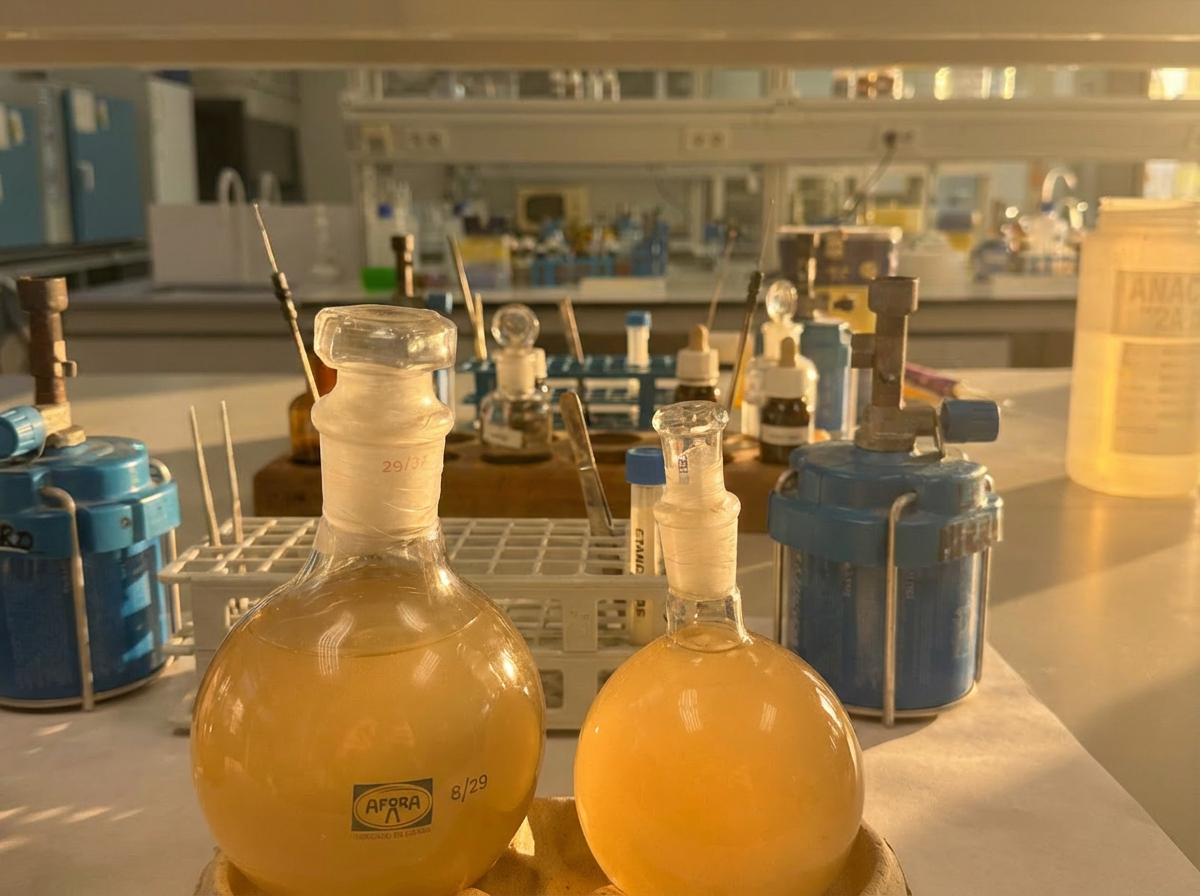
The work begins in the laboratory, where Magnetospirillum gryphiswaldense is cultivated under carefully controlled conditions. A growth medium is prepared with specific iron concentrations and adjusted to the correct pH - iron being essential for the formation of the magnetosome chains that give the bacteria their magnetic properties.
Because the organisms require a low-oxygen environment, dissolved oxygen is removed from the medium using nitrogen gas before inoculation. The culture is then incubated at a controlled temperature until the bacteria reach sufficient density for their optical properties to become visible - a process that takes several days.
The mature culture is transferred into a sealed glass vessel, where it remains stable without further intervention. Once installed, the work continues to evolve quietly through the interaction of light, magnetism, and the living system.
Because the organisms require a low-oxygen environment, dissolved oxygen is removed from the medium using nitrogen gas before inoculation. The culture is then incubated at a controlled temperature until the bacteria reach sufficient density for their optical properties to become visible - a process that takes several days.
The mature culture is transferred into a sealed glass vessel, where it remains stable without further intervention. Once installed, the work continues to evolve quietly through the interaction of light, magnetism, and the living system.
Acknowledgements
& Credits
A project by Howard Boland and Laura Cinti.
The Phenomenon was developed for 'Water as a Site for Transformation', curated by Iva Buzhashka at Istorik Gallery in Valencia, Spain, March 2026. The exhibition explores water as a site of connection between bodies, ecologies, and more-than-human worlds, featuring works by C-LAB, Tarah Rhoda, Vøltika, and Maria Peredo Guzman.
Thanks to Iva Buzhashka for supporting the development of this new version of the work and engaging with the physiological considerations of exhibiting a living artwork.
With sincere thanks to Dr Rosa Montes Estellés and Dr Miguel García Ferrús, CAMA (Applied Microbiology Advanced Research Centre) at the Universitat Politècnica de València for their support in cultivating the bacteria.
The Phenomenon was developed for 'Water as a Site for Transformation', curated by Iva Buzhashka at Istorik Gallery in Valencia, Spain, March 2026. The exhibition explores water as a site of connection between bodies, ecologies, and more-than-human worlds, featuring works by C-LAB, Tarah Rhoda, Vøltika, and Maria Peredo Guzman.
Thanks to Iva Buzhashka for supporting the development of this new version of the work and engaging with the physiological considerations of exhibiting a living artwork.
With sincere thanks to Dr Rosa Montes Estellés and Dr Miguel García Ferrús, CAMA (Applied Microbiology Advanced Research Centre) at the Universitat Politècnica de València for their support in cultivating the bacteria.