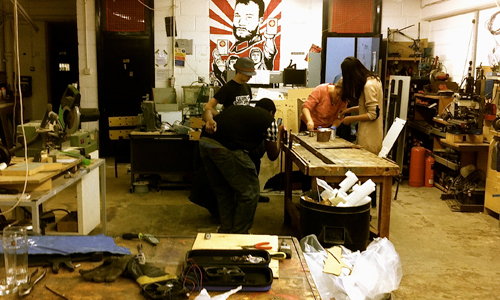
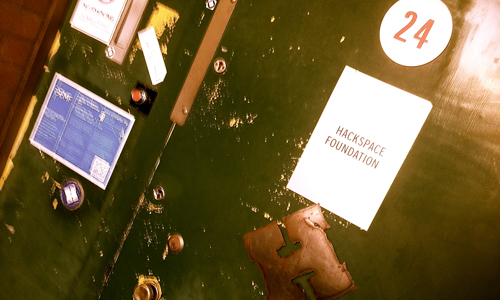
This year UCL iGEM team is challenging public accessibility of standardised biological components (BioBricks™) by collaborating with London Hackspace - a community-run workshop in Shoreditch (Cremer Business Centre, Unit 24). As advisor on the UCL iGEM team, I came along with a PCR....
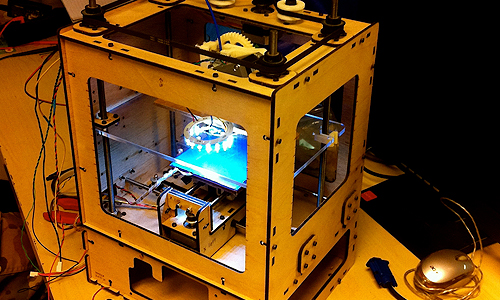
Part of the space is dedicated to tinkering and soldiering. Here, arduinos, computer parts, even self-made 3D-printers (image below, called 'the cupcake') and old IRC technology is very much alive.
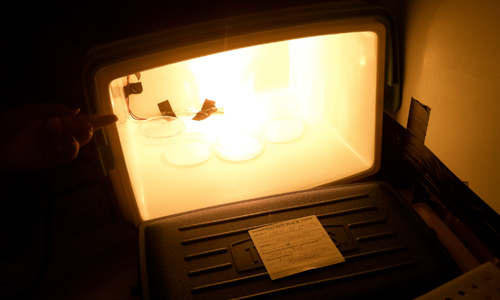
The workshop area is equipped with tools for wood work, laser cutting and mounting. At the back a small photography room is used as a shared DIY biohacking space fitted with a PCR machine, an improvised pulsating incubator (image below) and a small fridge filled with surprisingly many reagents, including a Taq PCR mixture.
On arrival, a quick tour of the hackerspace was followed by a discussion with one biohacker. Waving the handbook 'Genetics for Dummies', he describes his struggle to grasp the vast knowledge space of molecular biology before turning to us asking 'how do I do it?'
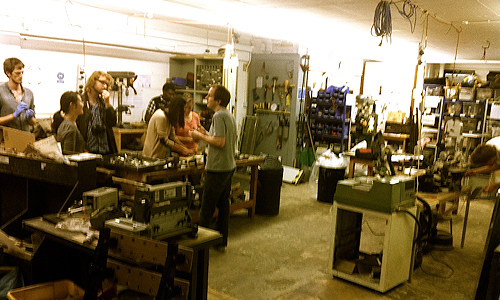
A brief background to the hackerspace can be outlined as an open knowledge democratising foundation where members pay what they can in monthly contributions to partake.

One member of the UCL iGEM team worked with the hackers to construct a DIY shaker using cardboards, springs and a motor. In the biohacking space (the photography room) another UCL iGEM member was busy checking plates and preparing the biohackers to PCR out a gene inferring frost resistance. Overnight plates had no growth but we had brought backups and these colonies were used as templates.
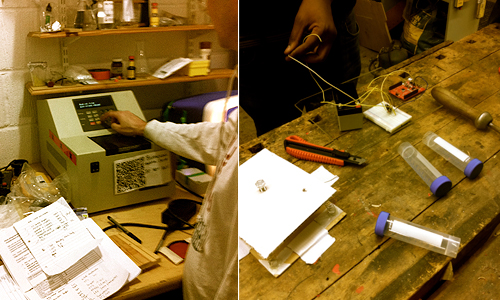
Back in the workshop, the seventh design attempt for the shaker was being implemented. An Arduino had been reprogrammed and connected with a potentiometer to control the frantic motor speed and it looked like it was finally going to work...
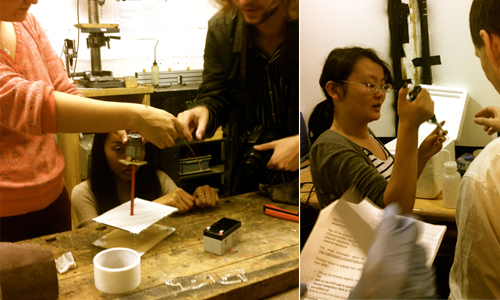
Photos of UCL iGEM's DIYbio collaboration with Hackspace workshop.