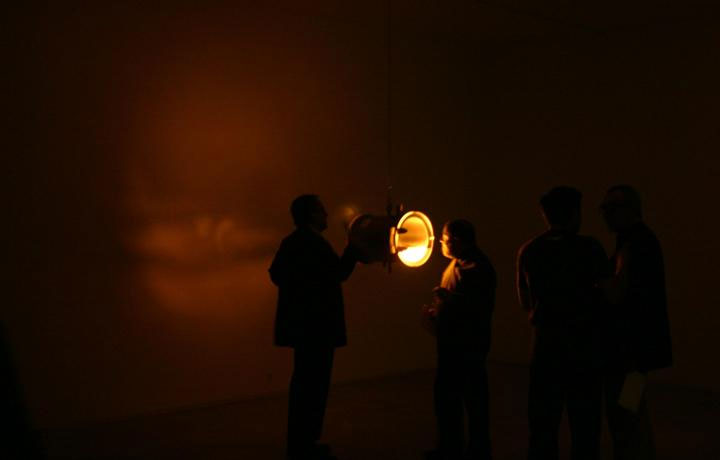
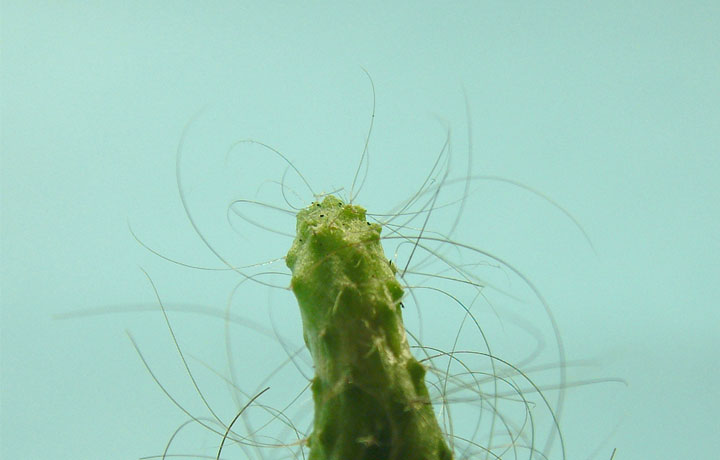
Howard Boland, katE - Visualising Stress (2011)
As part of Regine Debatty's (We Make Money Not Art) art, science & technology radio show on Resonance 104.4FM titled, #A.I.L - artists in laboratories, C-LAB's Howard Boland spoke about current research with magnetic nanoparticles and synthetic biology projects.
Listen to WMMNA radio interview broadcasts on Resonance 104.4FM (click on play button)
Regine: "You seem to be particularly taken with using synthetic biology to explore the world of bacteria these days. Can you tell us what makes bacteria so fascinating to you and which experiments and artworks you've developed using bacteria?"
Howard: "So synthetic biology and bacteria are quite interconnected in my research. The bacteria I use are E.coli which is the most common laboratory strain. I prepare bacteria in a way so they are capable of taking up a genetic program, you can think of this as DNA in water, I add this to them by give them a small shock using heat and this will get the program into the cells. The bacteria will then run the program in a similar sense that it is already running its ‘master program’ or the genome. There are many ways of creating these programs. Synthetic biology, as used in my practice, provides methods to create programs and also explore programs made by other. Components to make programs and some working programs are found in a library that gets sent out every year. The library is expanding and improving – but still there are many issues and often we find things don’t work as they are supposed to.
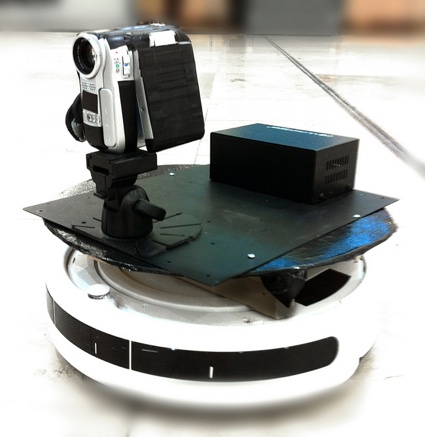
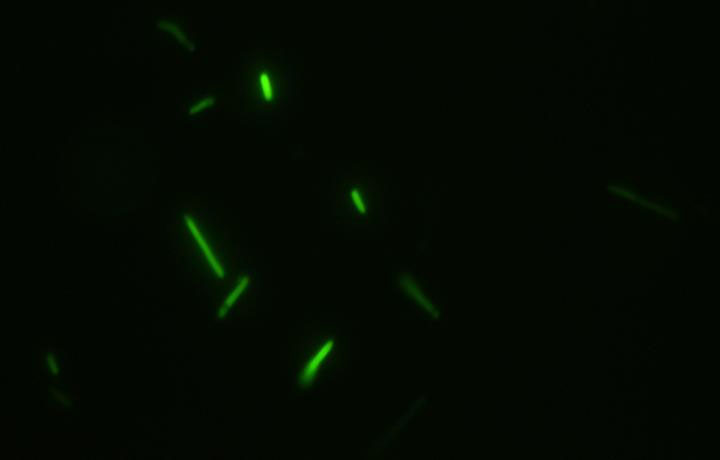
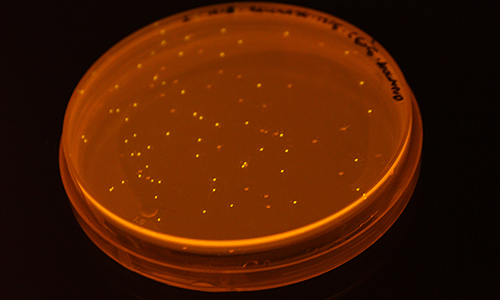
When I started this undertaking, I explored standard genetic engineering and while this is similar to synthetic biology, you don’t have readily access to the same amount of material. One of the things I built was a genetic construct or program that would cause bacteria produce a light when they are low on food or in similar oxidative stress conditions. To do this, I used a technique where I extracted a genetic switch or promoter from the genome involved in oxidative stress, and connecting this with a reporter gene, when the switch turned ‘on’ we could see stress being expressed. I then experimented with ways of visualising and controlling the system using a setup called a chemostat that allowed me to manage the cell population and stress parameters, by changing the parameter you can have a fluctuating light. The work is called Stress-o-stat and is a large living display reminiscent of an artificial organ that glows as bacteria become stressed. The work is an an artistic example of trying to tap into biological meaning processes."

Howard Boland, Stress-o-stat (2011)
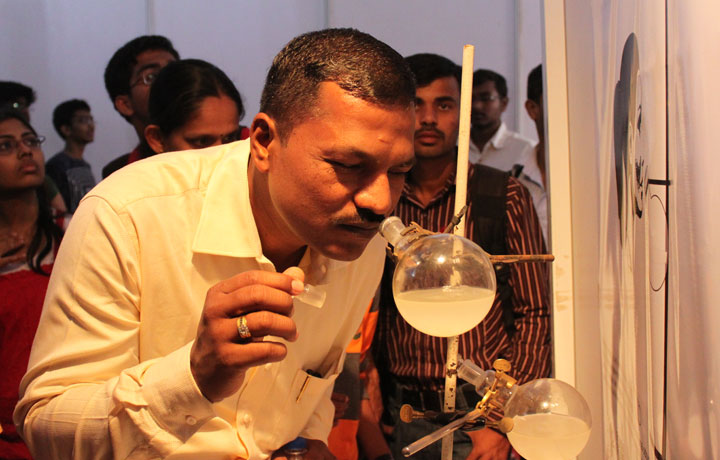
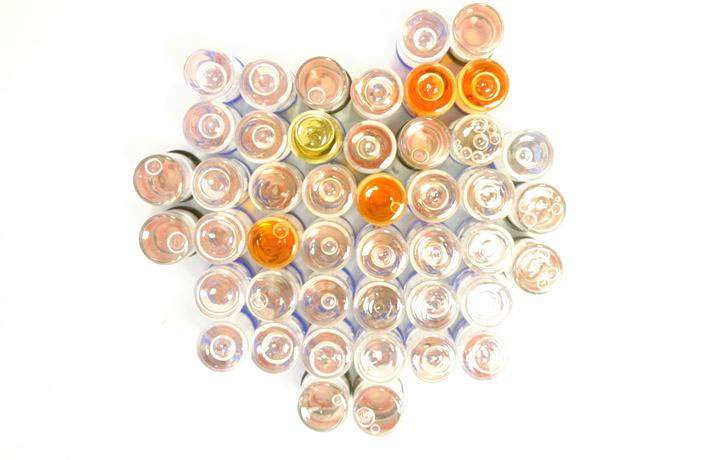
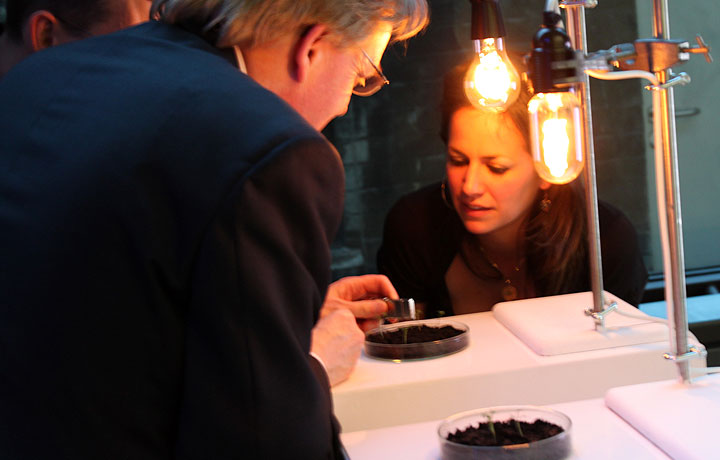
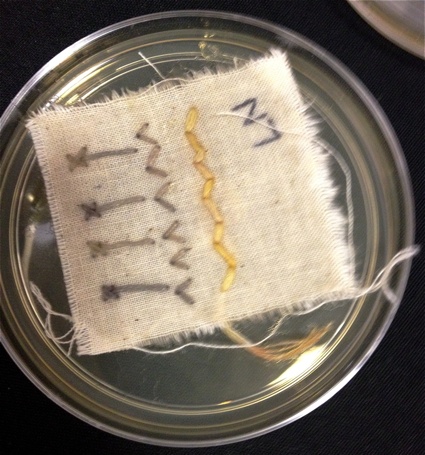
Howard: "In addition to synthetic biology, I have also explored other bacterial systems, for instance in one work, I use bacteria found in sewage water capable of degrading dye as an image making system, images appear as the dye disappear before vanishing."
Howard Boland, Sludge Bacteria (2011)
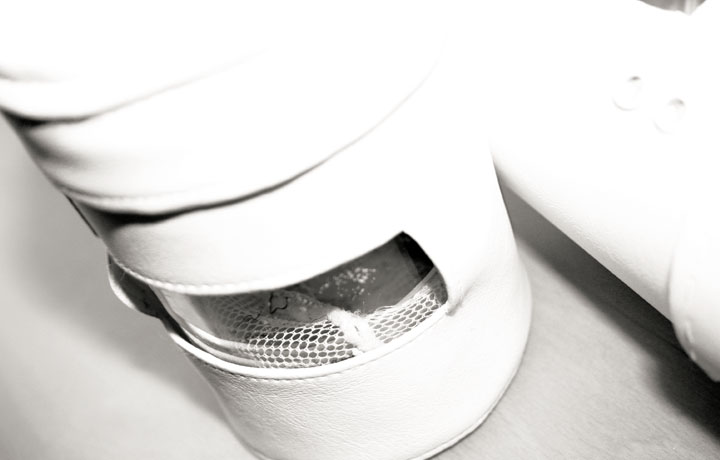
Howard Boland, Transient Images (2011)
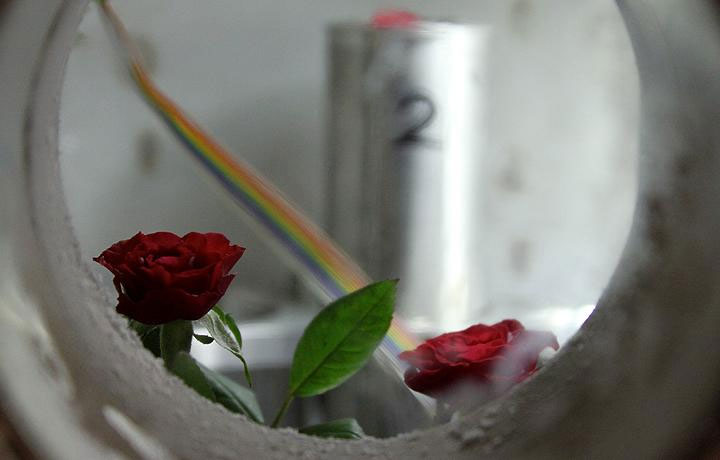
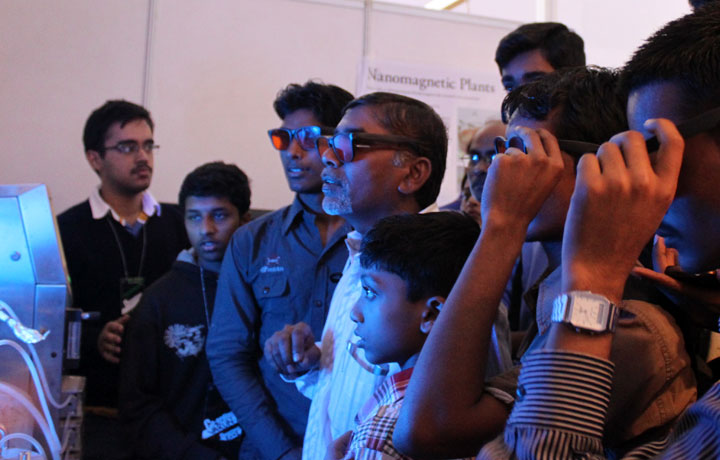
Howard: "I am also working with nanomagnetic bacteria to make a living mirror by moving them around an electromagnetic grid that is activated according to light or dark points on a face. I did try out Laura’s nanomagnetic particles on my stress-bacteria, and I found that I could actually make them move like a compass using a magnet."
Howard Boland, Bacteria Compass (2012)
Howard: "I think what has been important for me is to see bacteria from many angles, microscope, liquid, solid, genetically altered and wild, and from this to build a relationship, appreciation and fascination with these workers. In doing so I am trying to address the challenge of working with something so small and locating ways that allow us to come up close interact or sense them as living matter carving their way in a chemical universe, whether this is smelling, seeing, touching or some other mechanism."
Listen to Anna Dumitrui interview broadcasts on Resonance 104.4FM (click on play button)
In the first episode of WMMNA's art science & technology radio show, Regine speaks to artist Anne Dumitrui of The Institute of Unnecessary Research about her collaborative work with bacteria.

Anna Dumitrui
Listen to Richard Pell interview broadcasts on Resonance 104.4FM (click on play button)
We are introduced to the Richard Pell, the founder and director of a museum - The Center for Postnatural History (Pittsburgh, USA) - the first museum that seeks to research, document and exhibit man-made biological systems.

Richard Pell, The Center for Postnatural History
Listen to Howard Boland interview broadcasts on Resonance 104.4FM (click on play button)
In the third episode, Howard discusses C-LAB's research from banana smelling bacteria to nanomagnetic plants.

Listen to Jonah Brucker Cohen interview broadcasts on Resonance 104.4FM (click on play button)
The following week, we meet researcher/artist/writer Dr. Jonah Brucker-Cohen in the fourth episode who discusses hacking, social media and designing critical networks.

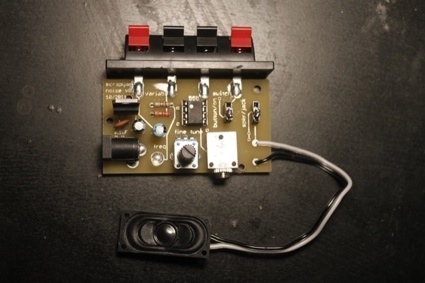
Jonah Brucker-Cohen, Scrapyard Challenge Junior Noisemaker Kits (2012)
Listen to Tom Keene interview broadcasts on Resonance 104.4FM (click on play button)
In the fifth episode, we are introduced to artist and hacker, Tom Keene, who investigates technological objects and attempts to understand their agency and how they act as mechanisms of control within contemporary society.