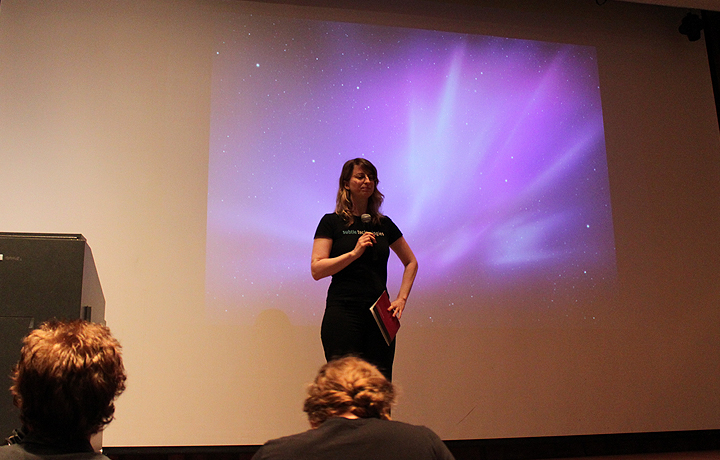
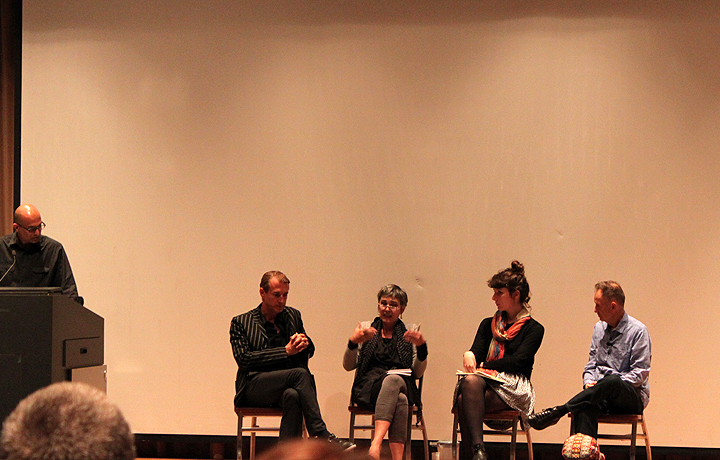
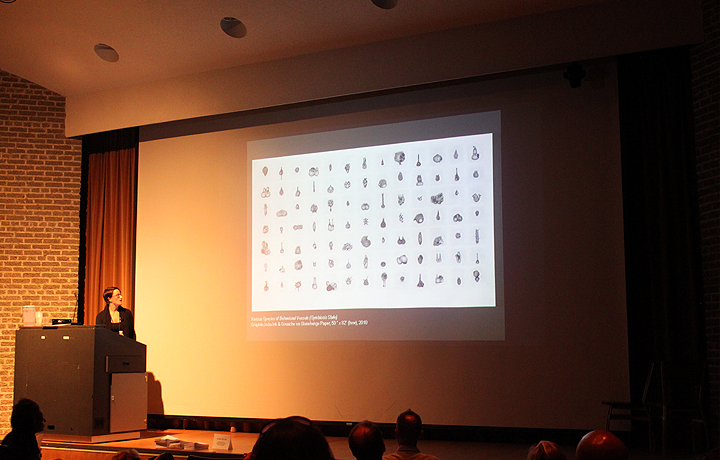
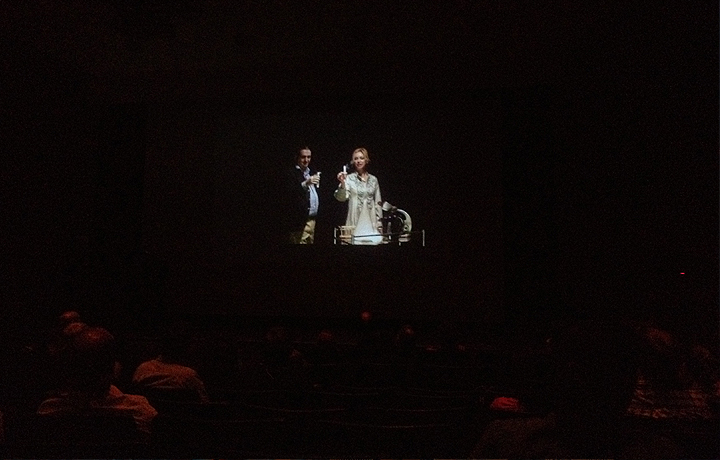
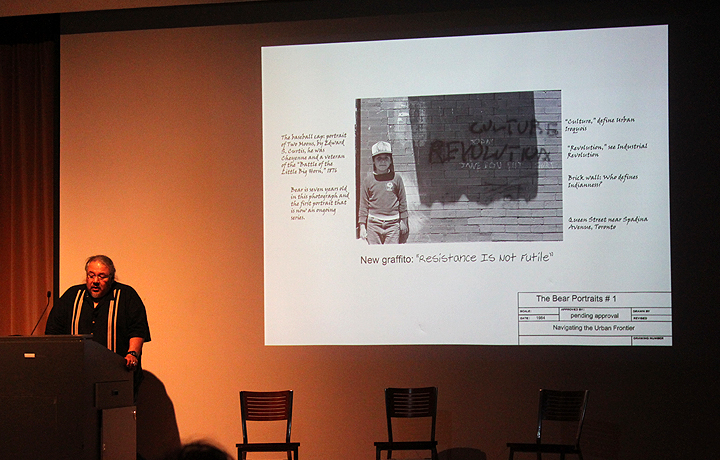
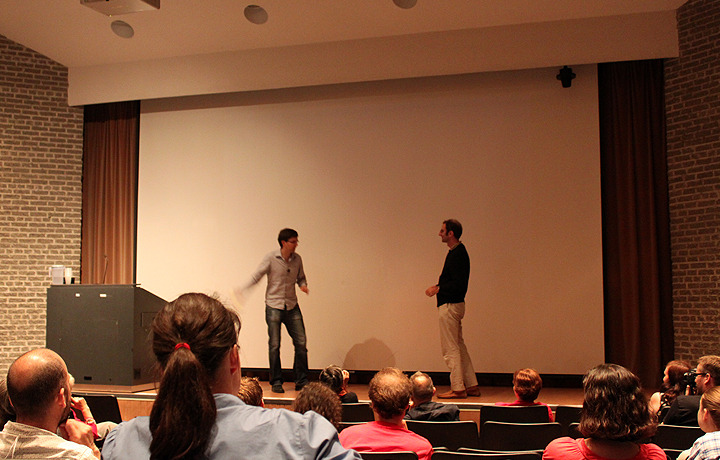
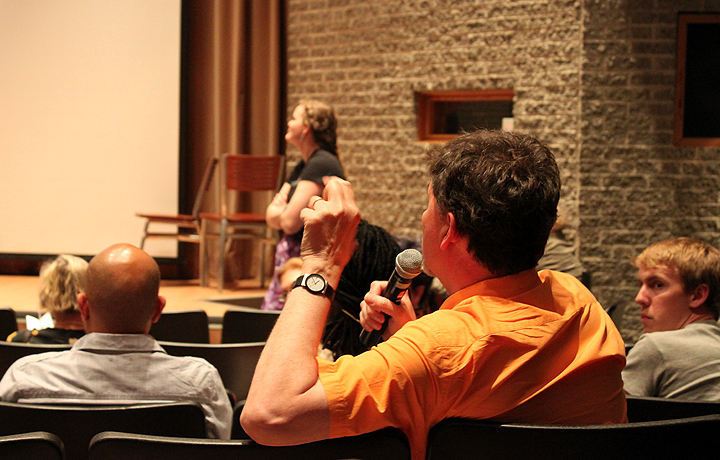
C-LAB was invited to present its recent artistic development using synthetic biology and nanotechnology at Subtle Technologies Festival, an internationally recognised annual event presenting works by artists and scientists at the leading edge of their respective disciplines. It includes a symposium, performances, workshops, screenings, exhibitions and networking sessions to establish a forum to explore ideas and pose questions at the intersections of art, science and technology.

The first day themed Art, technology & science ideas, began with a speed-networking session that proved an efficient way of meeting festival delegates. Following this, Heather Barnett, Joshua Dinsmore, Melissa Fisher and John Smith of University of Westminster introduced us to the Broad Vision programme and Henry Reich gave a presentation on his youtube channel MinutePhysics.
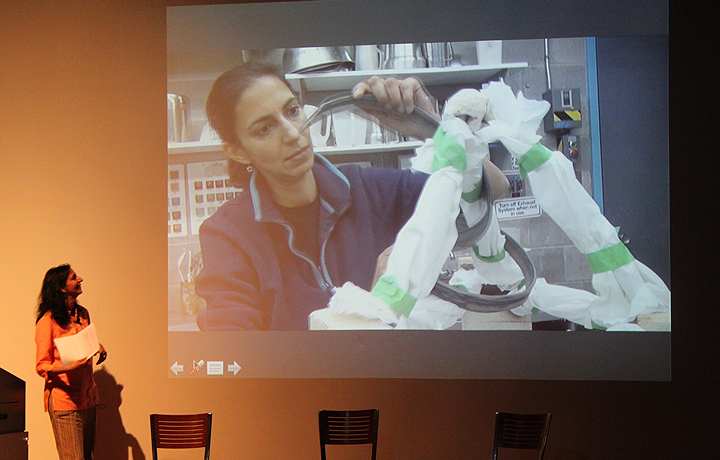
After a lunch, visual artist Fernanda D'Agostino spoke of her video installation artwork, Motion Studies, an interpretation of scientific imaging system used to visualise air currents made by flying birds. The morning session finished with the Canadian premiere of Momentum - Rachel Armstrong a celebratory and fetish documentary featuring Rachel as a 'genius of our time' and her loosely sketched ideas on protocells.
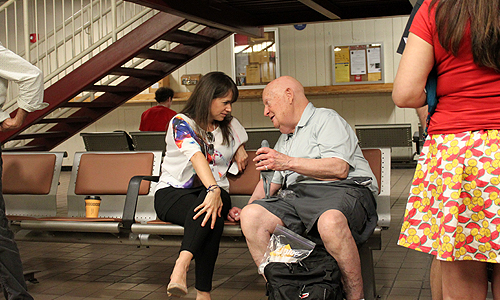
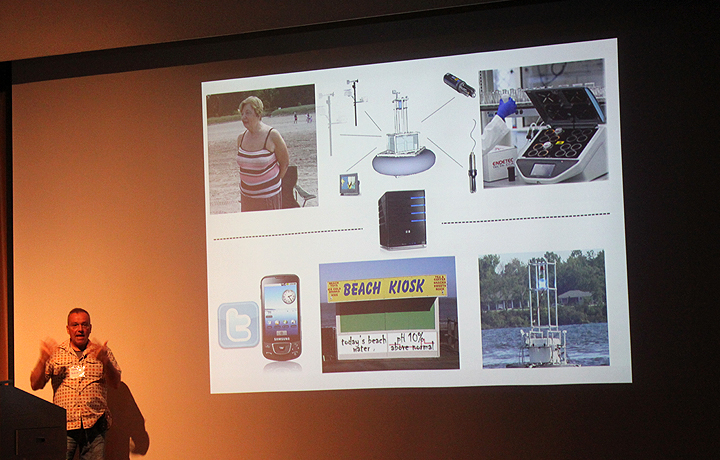
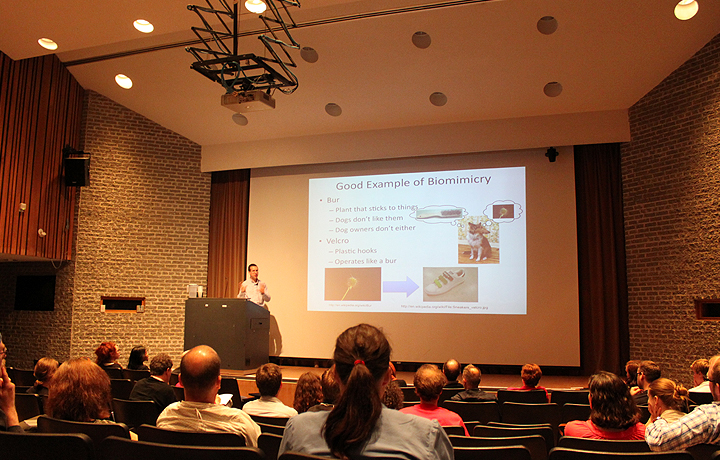
After a short coffee break, Marc Böhlen presented his research combining instrumentation-sensing with personal experiences to produce measurements towards more personalised resource conservation. Physicist Krister Shalm's guided us through the intricacies of the "double-slit experiment" - described by Richard Feynman as the "very heart of quantum mechanics." In the final presentation of the day, James Andrew Smith showed fascinating aspects of robot research and rethinking design through biomimetics to develop future technologies.
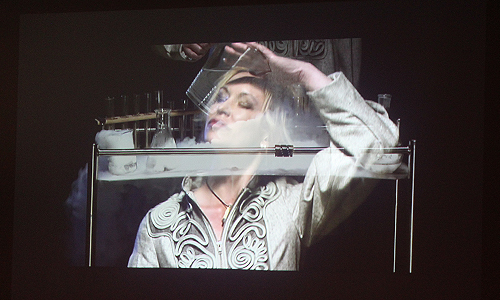
The first day of the symposium ended off with a poster exhibition curated by Lorena Salomé showcasing intriguing projects as well as the fantastic interactive haptic holographic drum.
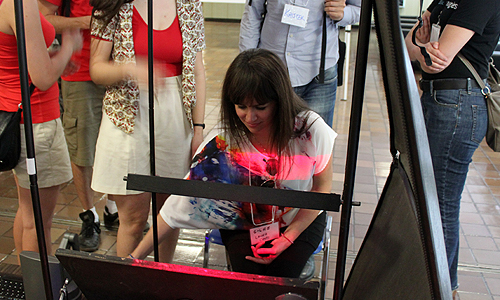
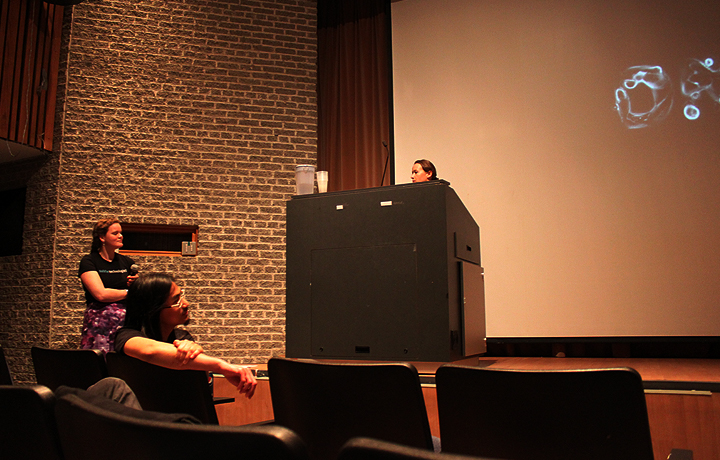
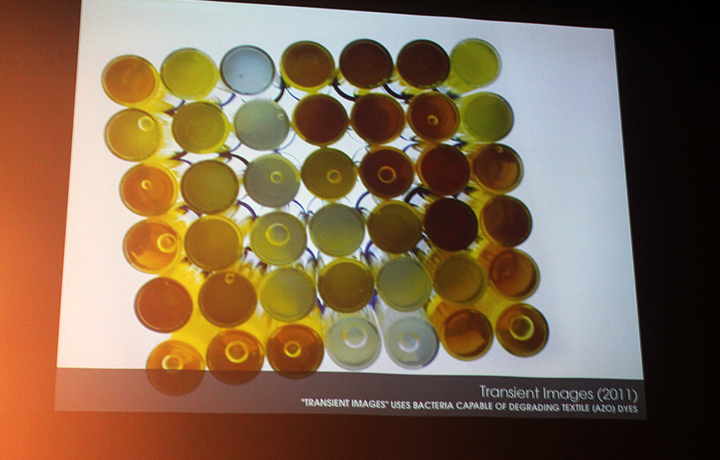
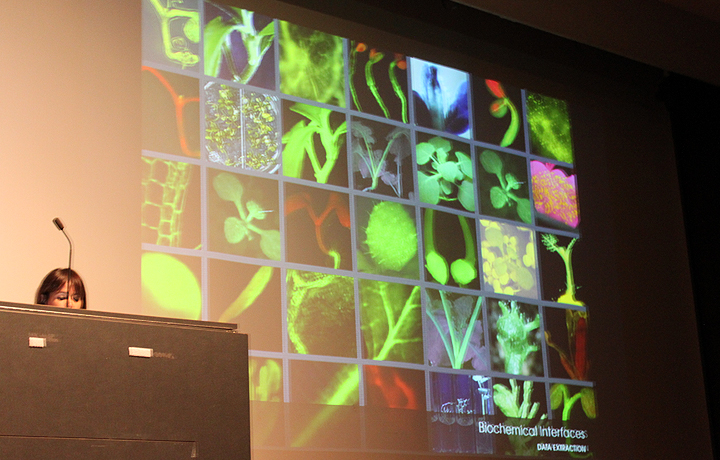
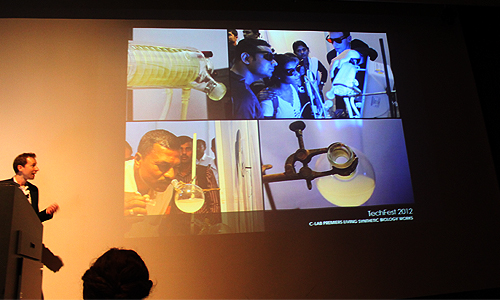
The second day was themed Biology and Art. First up was C-LAB, introduced by Laura Cinti who discussed her doctoral research (2011, UCL) that included probing scientific possibilities of having living (non-specialised) plants respond directly and visibly to touch. Howard Boland outlined his doctoral research in synthetic biology highlighting the institutional challenges facing hybrid practitioners in articulating scientific knowledge processes within the humanities.
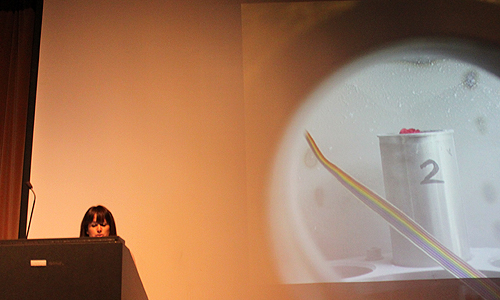
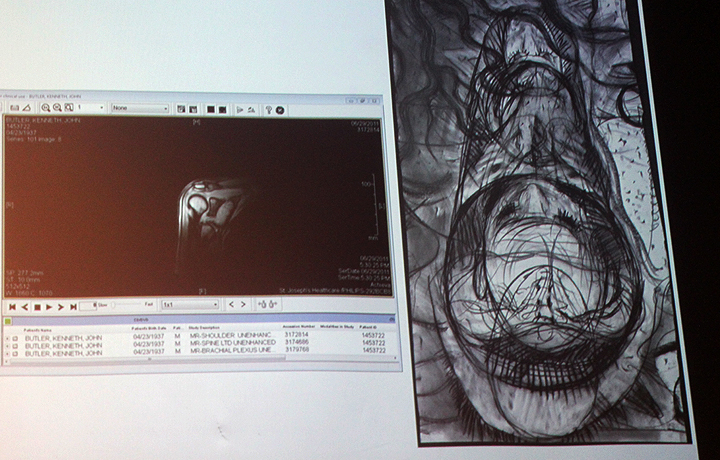
Following C-LAB's presentation, artist Jack Butler gave a personal account of mapping his own embodied experience and visual data produced by magnetic resonance imaging (MRI).
After a short coffee break, Verena Friedrich spoke of her work-in-progress Cellular Performance that involves shaping human skin cells into readable texts through a series of methods involving tissue culture, microfabrication, and patterning techniques.
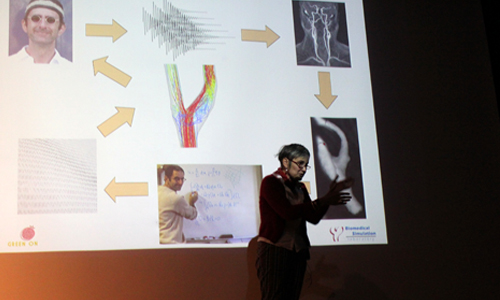
Next up was Dolores Steinman's engaging presentation on her research with David Steinman utilising sound as a novel method for interpreting data of blood flow patterns.
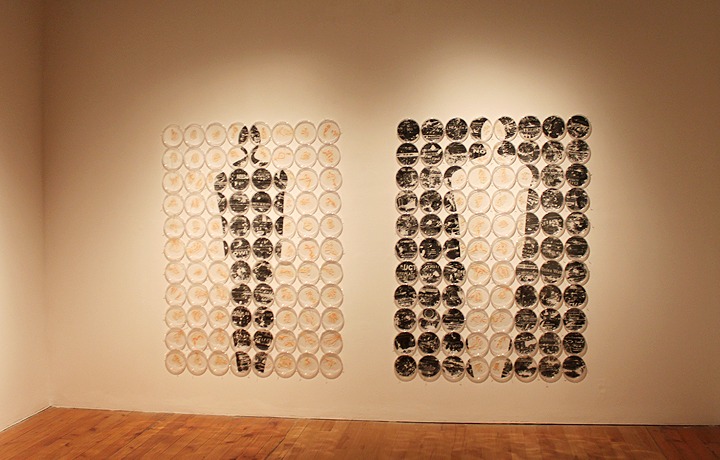
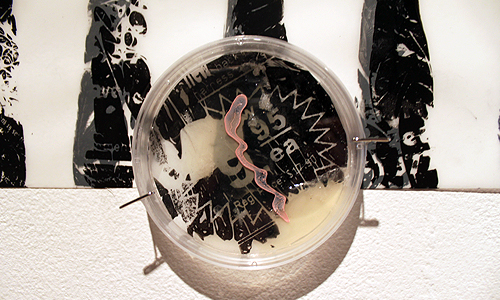
During lunch break we made our way across town and visited Elaine Whittaker's Cc:me exhibition which included live salt-thriving bacteria, Halobacterium sp. NRC-1, identified by their pink pigment production.
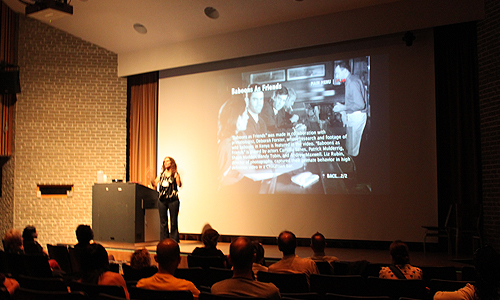
We just made it back in time for Gail Lotenberg and Mark Winston's discussion on the outcome of their dance/science collaborative engagement. Rachel Mayeri's presentation provided a rather amusing encounter with our ape-like selves through a series of videos on primate "soap operas" for human and chimpanzee audiences.
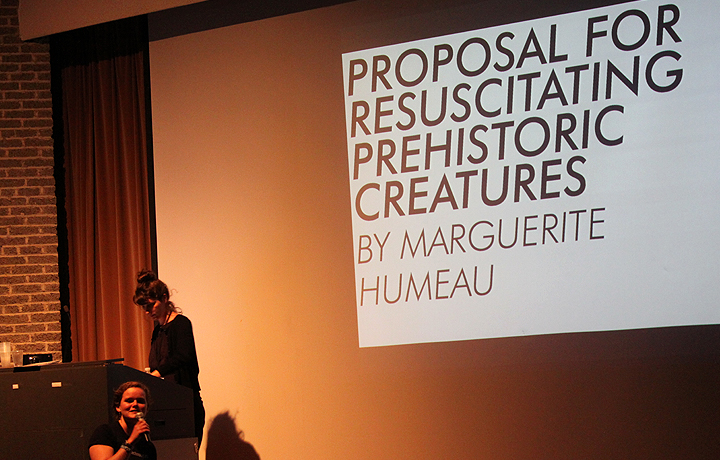
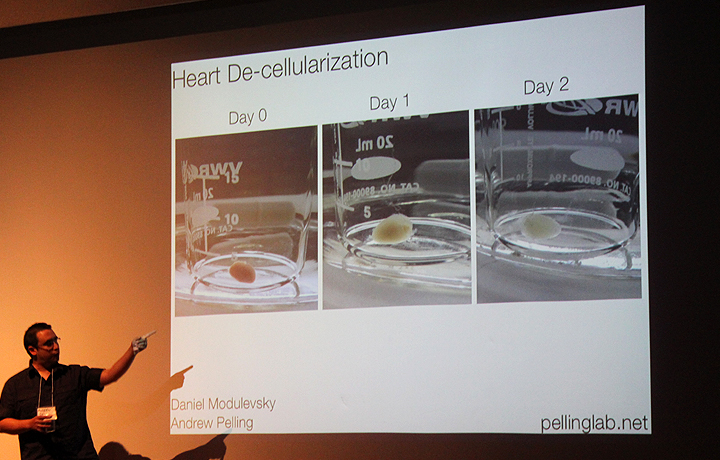
The final three presentation for the day included: Margurite Humeau's work that explores possibilities of reviving sounds of extinct animals by reconstructing their vocal tract; Amber Stucke's philosophical and interdisciplinary ideas around her imaginative botanical drawings combining biology and evolutionary consiousness and; Andrew Pelling's bio-hacking activities pushing the limits of biological function opening exciting possibilities that cross material boundaries.
The final day of Subtle Technologies Festival, curated by Zulfikar Hirji, themed The Immortal Body included the Canadian Premiere of BioArt - Art from the laboratory.
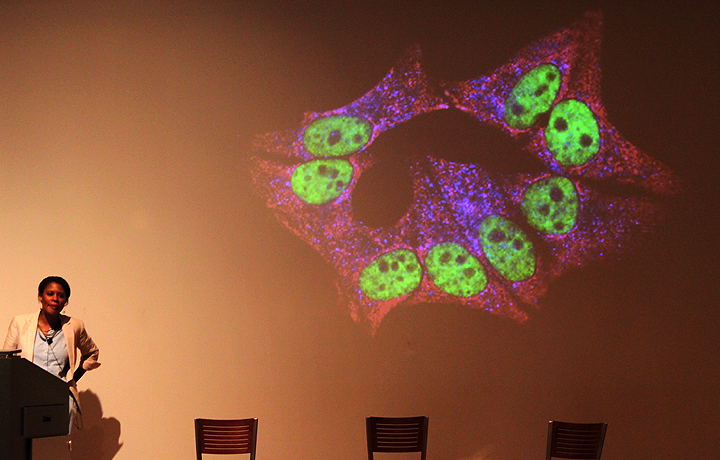
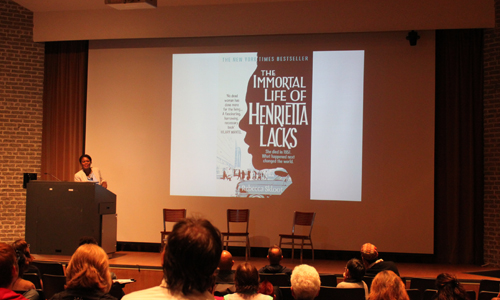
This was followed by a keynote talk by Alondra Nelson providing insights into the racialised medical discrimination of Henrietta Lacks: a story about a young black woman whose cells were extracted and cultured from her cancerous tumour without her permission to create the immortal cell line (HeLa) found in laboratories throughout the world. Local artists Heidi McKenzie and Jeff Thomas were invited to respond to Nelson's presentation.
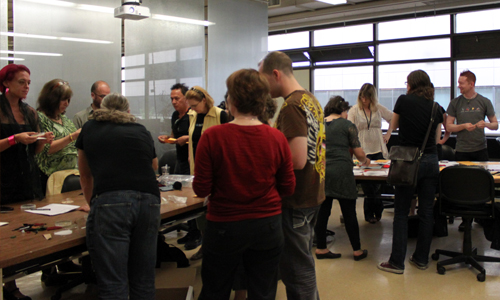
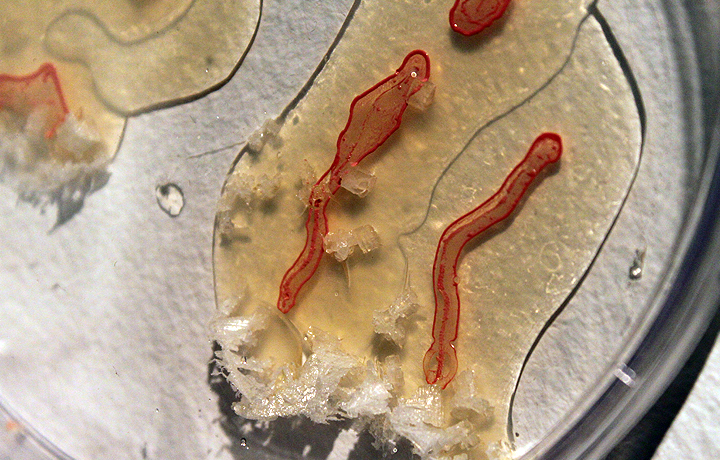
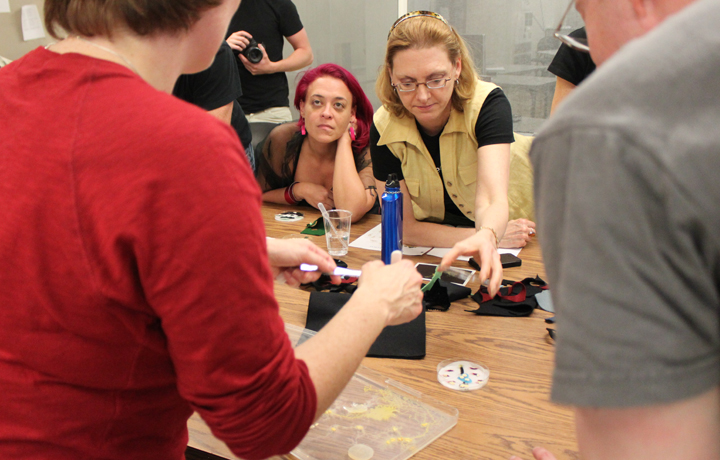
The festival ended off with a practical workshop Physarum Experiments by Heather Barnett where participants could create their own conditions to manipulate growth patterns in slime moulds.