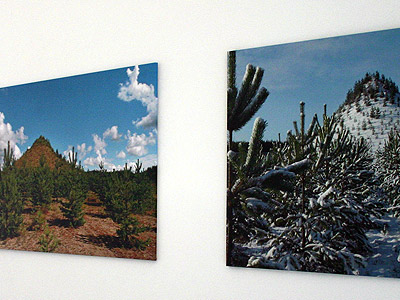
Bios 4
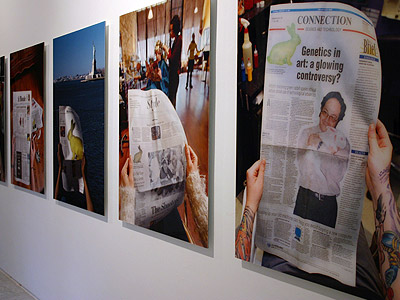
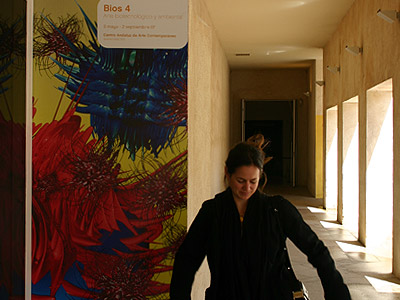
Bios 4 is one of the first exhibition of its kind in Spain and perhaps also one of the first times for biotech related works to be displayed in a museum setting as opposed to gallery.
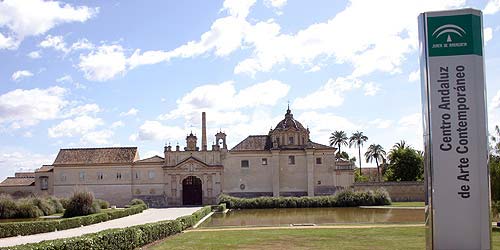
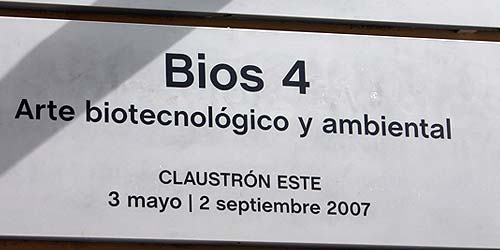
Bios 4
The name of the exhibition Bios 4 takes its name playfully in continuation of Biosphere 1, which is the earth our planet, Biosphere 2, was an artificial closed ecosystem built in Arizona around 1987-1989 in order to investigate space colonization, Bios 3, was an enclosed ecosystem at a biophysic institute in Siberia used for habitational experiments in the 1970 and 1980s. Another playful connotation is the computer term BIOS - Basic Input and Output System.
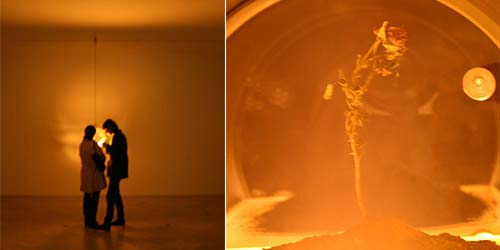
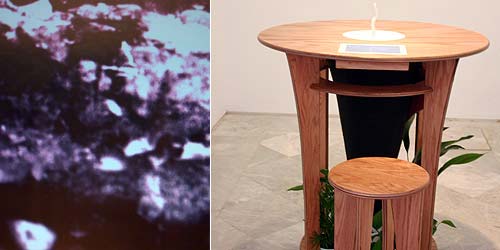
The Martian Rose
The Martian Rose had its first viewing. This is an installation by c-lab and plays with romantic and destructive ideas surrounding life on Mars. The rose shown had been exposed to martian conditions for six hours.
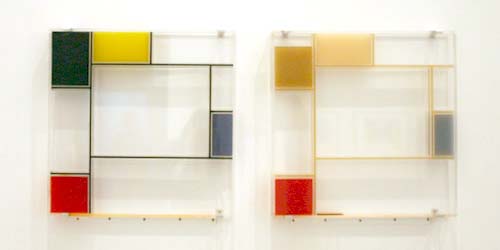
Martha de Menezes'
Another work having its first viewing was Martha de Menezes' colour eating bacteria which referenced Mondrian's works. One the left is the control whilst on the right bacteria is feeding on colour pigments and deteriorating the colours.
Amy Youngs
Amy Youngs showed her compost worm installation, taking a casual and humorous look on homely aspects of biology. An infrared camera monitors worms making their way through the compost and the screen on top allows the audience to view them.
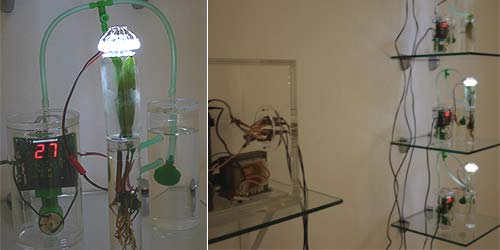
Philip Ross
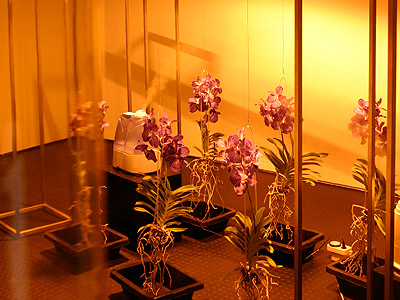
Philip Ross showed a series of survival capsules for plants in the work Junior Return.
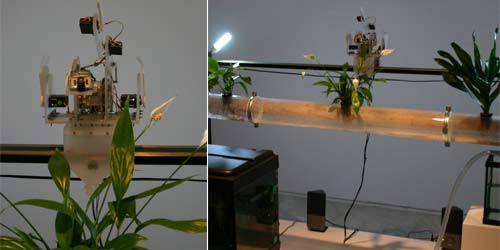
Andy Gracie
Andy Gracie added telepresence to the exhibition by providing an interface installation between a fish, plants and a rack.
George Gessert
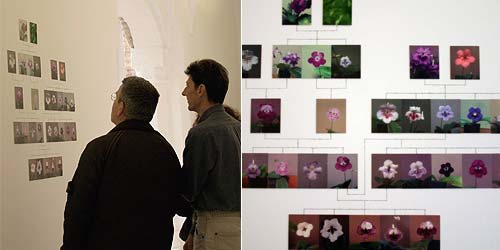
A selection tree and its visual outcomes was displayed by George Gessert in Natural Selection. Particularly for this diagram veins were a central aesthetic criteria.
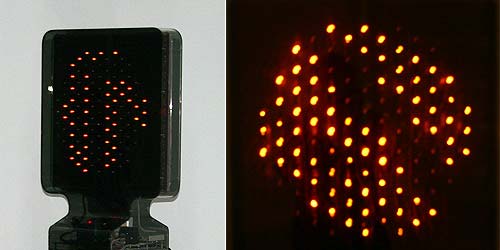
Norman T. White showed an early electronic work which had its first viewing in 1969. A series of digital circuits generate a moving light display on a bank of miniature neon bulbs using rule-based interactions.
Mark Cypher's
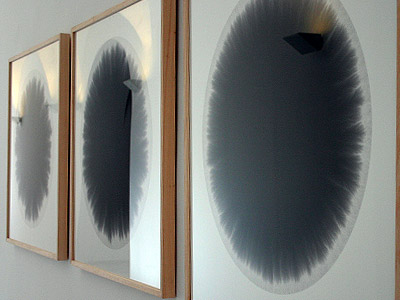
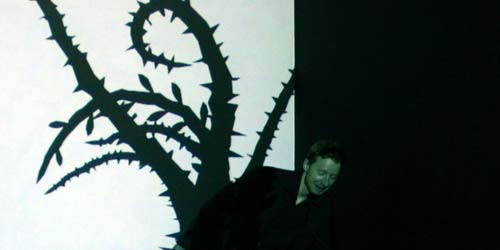
Mark Cypher's biophilia allowed audience to interact with generated organic forms based upon the distortion of shadow.
Ursual Damm's
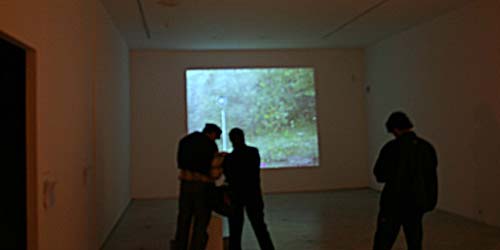
Ursual Damm's installation had both a sonic and visual presence that traced swarm patterns.
Bill Vorn
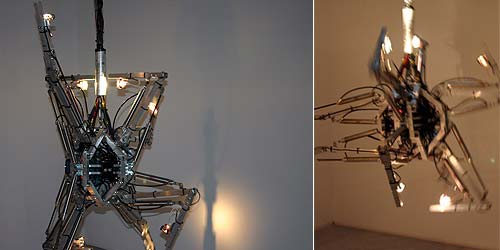
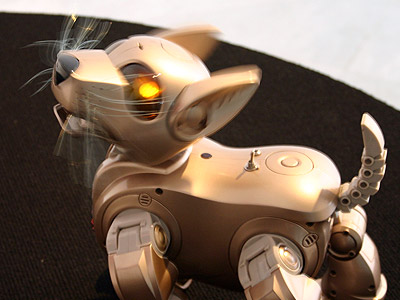
Hystria, by Bill Vorn featured two robots that reacted hysterically when audience approached.