Pseudo Organism
Mobilising bio matter to perform novel behaviours
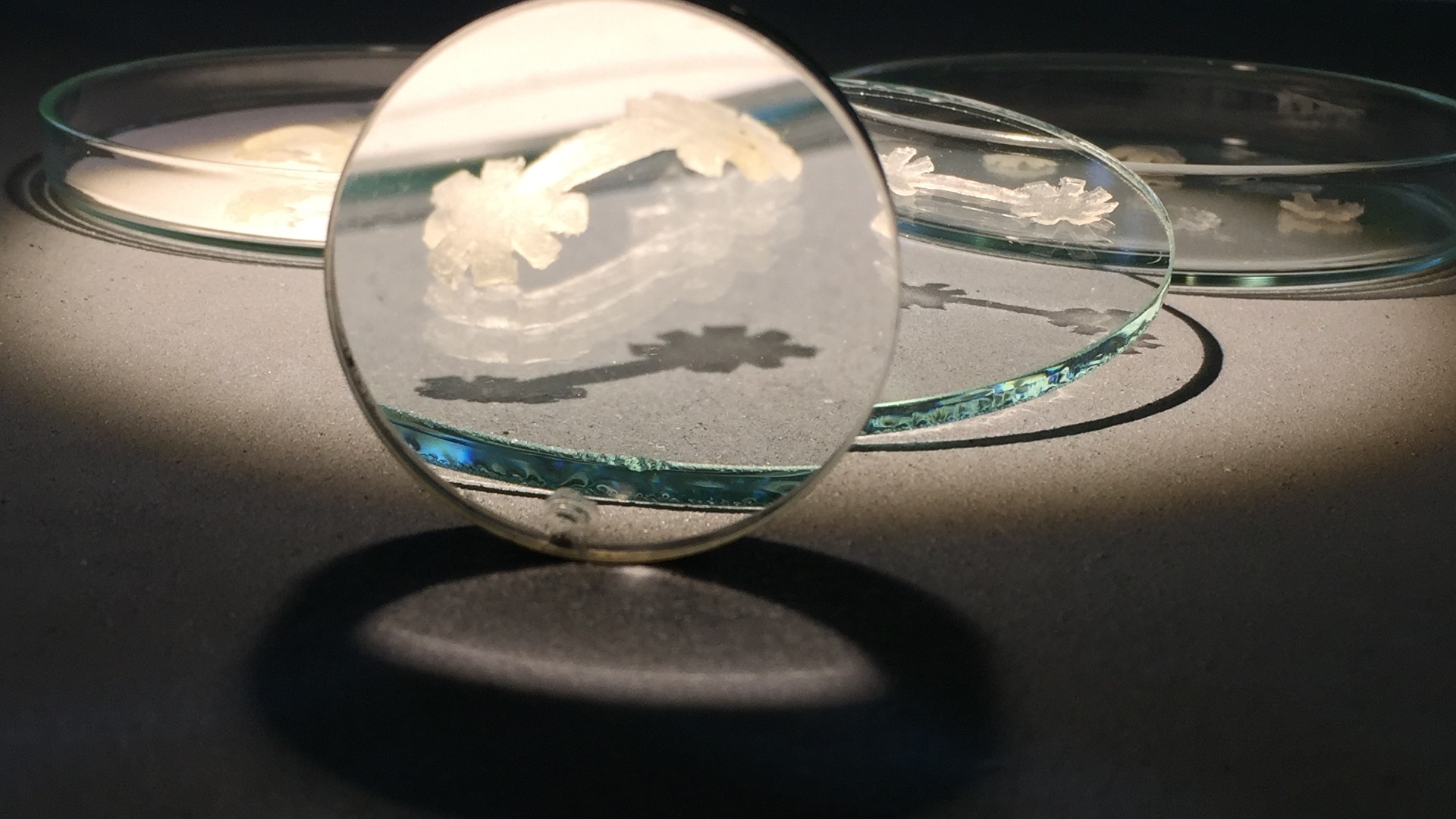
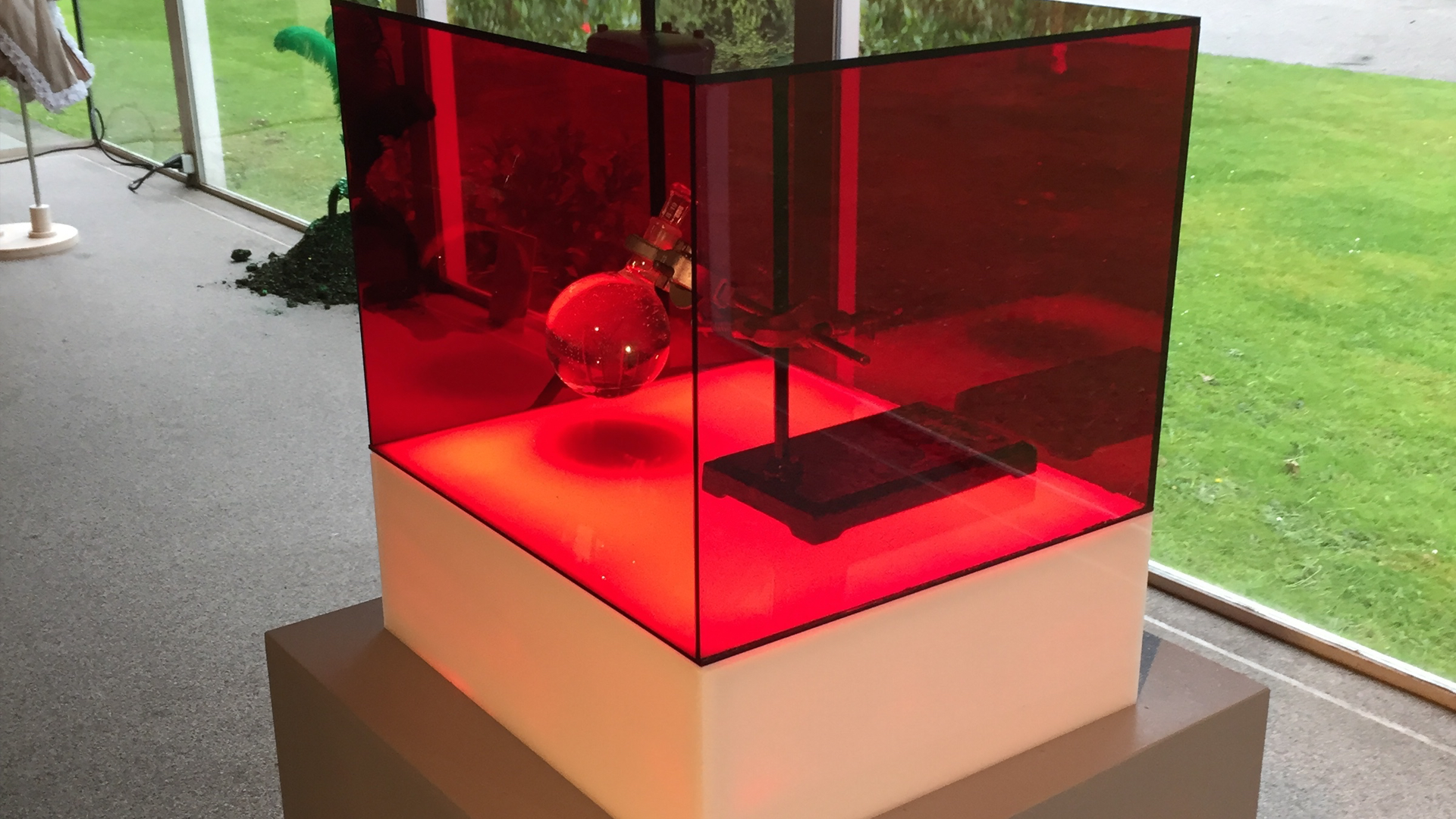
Cellular Propeller is an artwork that makes use of scientific and engineering methods to enable millions of sperm cells to rotate a coin-size synthetic scaffold. It involves the hybridisation of synthetic and biological matter to create novel biological or biologically inspired systems stretching into the realm of ‘pseudo organisms’. The work asks if the bio-hybrid artefact hints at a type of living entity by considering motion as a key characteristic used to recognise living organisms and the ethical challenges presented by using the artist’s own sperm cells.
Concept
A biohybrid actuator
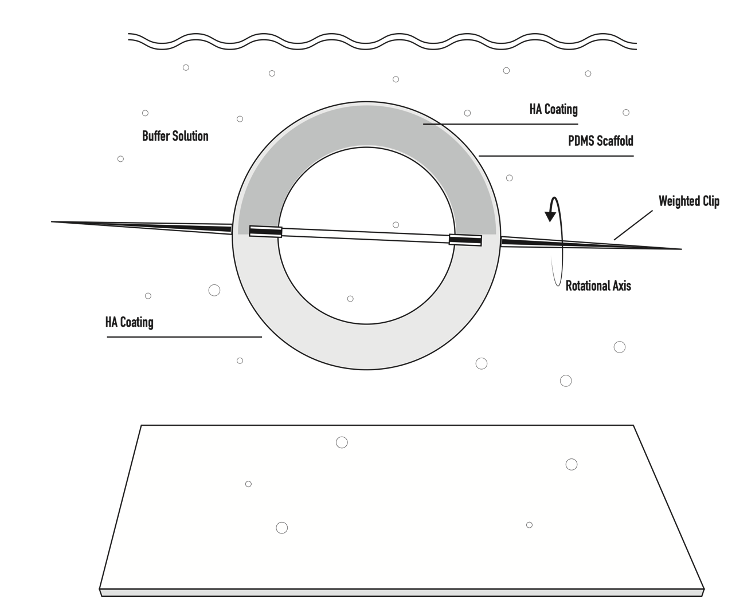
Cellular Propeller is a living kinetic hybrid organism that uses cells to move a giant plastic structure visible to the naked eye. Millions of cells are recruited to act as tiny biological actuators responsible for the movement. The structure design enables cells to be fixed to it in a manner that promotes a propeller-like motion. The work which is situated in the '4th domain of synthetic biology'and focuses on how forces operate on this scale and to what extent the hybrid combination of material and motion produces a living or pseudo organism.
Background
Residency at DKFZ
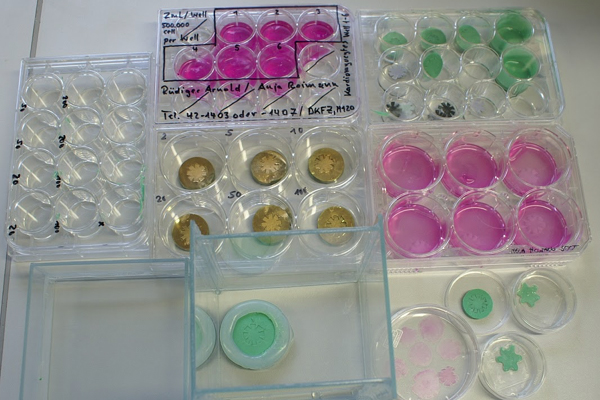
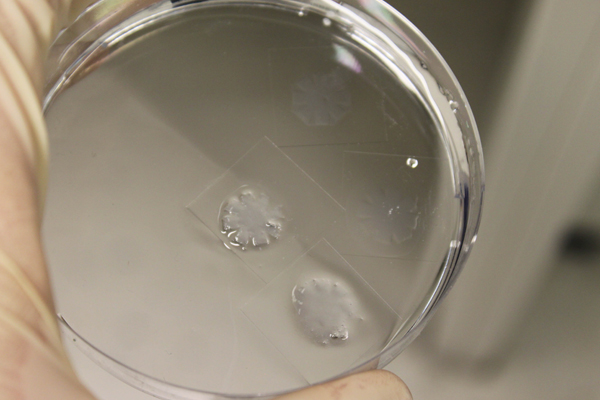
Conceptualised as part of an awarded Art and Synthetic Biology residency at the German Cancer Research Centre (DKFZ), it involved experiments with heart cells from newborn rats to make motile scaffolds. Due to limited availability of such material and ethical issues, it also takes the significant leap of using sperm cells to spin a coin-size wheel made from synthetic material. Availability of sperm cells and its potential for circumventing ethical ownership makes it appropriate for the project.
The Sperm Propeller
Circumventing ethics?
Availability of sperm cells and its potential for circumventing ethical ownership makes it appropriate for the project; it is, so to speak, also culturally-loaded. Obtaining biological material can be problematic due to legal restrictions and ethical frameworks especially critical in artistic scenarios. Using sperm cells opens debates about ownership of our body, its components and what we may harvest for art making. Beyond this, the cultural and biological condition of sperm cells involves a myriad of ideas including sex, pleasure, reproduction, IVF and health.
Cellular Propeller
Designing a propelled sperm wheel
Cellular Propeller brings together art, science, technology, ethics and humour. Still today, with all advances of molecular biology, motion remains a key attribute used to characterise something as living. Cellular Propeller partakes in rethinking what is living by producing a new hybrid living system or a bio-hybrid actuator. The project employs traditional quantitative engineering approaches to build a coin-size construct from living sperm cells and synthetic material that emulates a propeller motion. Morphologically, we are building a wheel or a functional propeller – genetically the propeller is human. Scientifically, the creation of the Cellular Propeller is about understanding how sperm cells function in an artificial environment and the fundamental laws of forces and motion that govern this scale.
Hybrid living systems
Novel use of sperm cells
Cellular Propeller uses scientific methods and engineering principles to enable millions of sperm cells to attach onto a synthetic scaffold in a manner that enables a propeller-like motion.
While millions of sperms must be recruited to achieve the task, an average male can produce ample stock of at least 40 million sperms in a single ejaculation. On one level, it is about a taboo material and questions raised by doing self-experimentation in institutional settings. On another, it is about the technical challenges of having cells rotate this, comparatively, enormous structure. The work builds a new hybrid living system making novel use of sperms cells and involves rethinking what is living.
Acknowledgements
Credits
As part of 'Not Invented by Nature', organised by Helmholtz Initiative Synthetic Biology, Howard Boland undertook a laboratory residency at German Cancer Research Center (DKFZ).

The work was first exhibited at BioQuant Centre in Heidelberg in (2013).

As part of 'Trust Me, I’m an Artist', an EU project exploring ethical issues in art and biotechnology, Cellular Propeller was presented at Transmediale (2016).


Interviewed by Annick Burread for Audiolats Podcast (2016) as part of 'Trust Me, I'm An Artist'.


Presented on TEDx at University of Boston, UK (2016).

Exhibited at Zone2Source, Het Glazen Huis, Amstelpark, Amsterdam (2017).